
Quick answer: A drone with a built-in screen controller is a strong choice when you want to fly without connecting a phone before every takeoff. For most first-time pilots, the SKYROVER S1 Combo with Screen Controller offers the most approachable balance of price, flight time, and camera features. Pilots who want 360-degree sensing and a more advanced camera system should consider the SKYROVER X1 Combo with Screen Controller. DJI Mini 4 Pro with DJI RC 2 remains a strong fit for buyers who prioritize DJI's established software and accessory ecosystem.
The controller matters more than many first-time buyers expect. A standard remote normally uses your phone as its display, while a screen controller combines the flight app, live camera feed, controls, and storage in one device. This guide compares the best drones with built-in screen controllers by total package, not just aircraft specifications.
Best drones with built-in screen controllers at a glance
| Drone and controller | Best for | Aircraft weight | Controller display | Price checked Sep. 3, 2026 |
|---|---|---|---|---|
| SKYROVER S1 Combo (RC with Screen) | Beginners and value | Under 249 g | 5.5-inch FHD, 700 nits | $519 promotional price |
| SKYROVER X1 Combo (RC with Screen) | Advanced compact-camera features | Under 249 g | 5.5-inch FHD, 700 nits | $699 promotional price |
| DJI Mini 4 Pro with DJI RC 2 | DJI software and accessory ecosystem | Under 249 g with standard battery | 5.5-inch 1080p, 700 nits | $959 listed configuration |
| DJI Air 3S with DJI RC 2 | Dual-camera travel production | 724 g | 5.5-inch 1080p, 700 nits | $1,599 listed configuration |
Prices and availability change. The table uses official U.S. product pages checked on September 3, 2026. Compare the current package contents as well as the headline price because batteries, charging hubs, cases, memory cards, and protection plans can materially change the total cost.
Why choose a drone remote with a screen?
Faster setup before a flight
A dedicated screen controller removes the repeated phone-mounting and cable-connection steps. Once the equipment is activated and updated, you can power on the aircraft and controller, confirm the flight status, and prepare for takeoff without handing over your everyday phone. That can be useful on a trail, at a property shoot, or during a short weather window when setup time matters.
Your phone stays available
Flying with a phone-based remote ties up the device that you may also use for calls, maps, shot lists, client messages, and emergency communication. A controller with an integrated display keeps those tasks separate. It also avoids incoming calls and notifications covering part of the flight interface.
A display designed for flight controls
Brightness is only one part of outdoor usability. A flight controller should also give the app a stable processor, dedicated controls, predictable power management, and an uncluttered interface. The SKYROVER screen controller and DJI RC 2 each use a 5.5-inch display rated at 700 nits. Direct sun can still create reflections, so shade the display when necessary and never let screen visibility replace visual line of sight.
Independent battery life
A long flight session can drain a phone quickly, especially at maximum brightness. SKYROVER lists up to three hours of controller operating time, while DJI also lists a maximum three-hour operating time for DJI RC 2 under stated test conditions. Actual runtime varies with brightness, wireless use, temperature, recording, and battery age.
SKYROVER S1 with screen controller: best for beginners
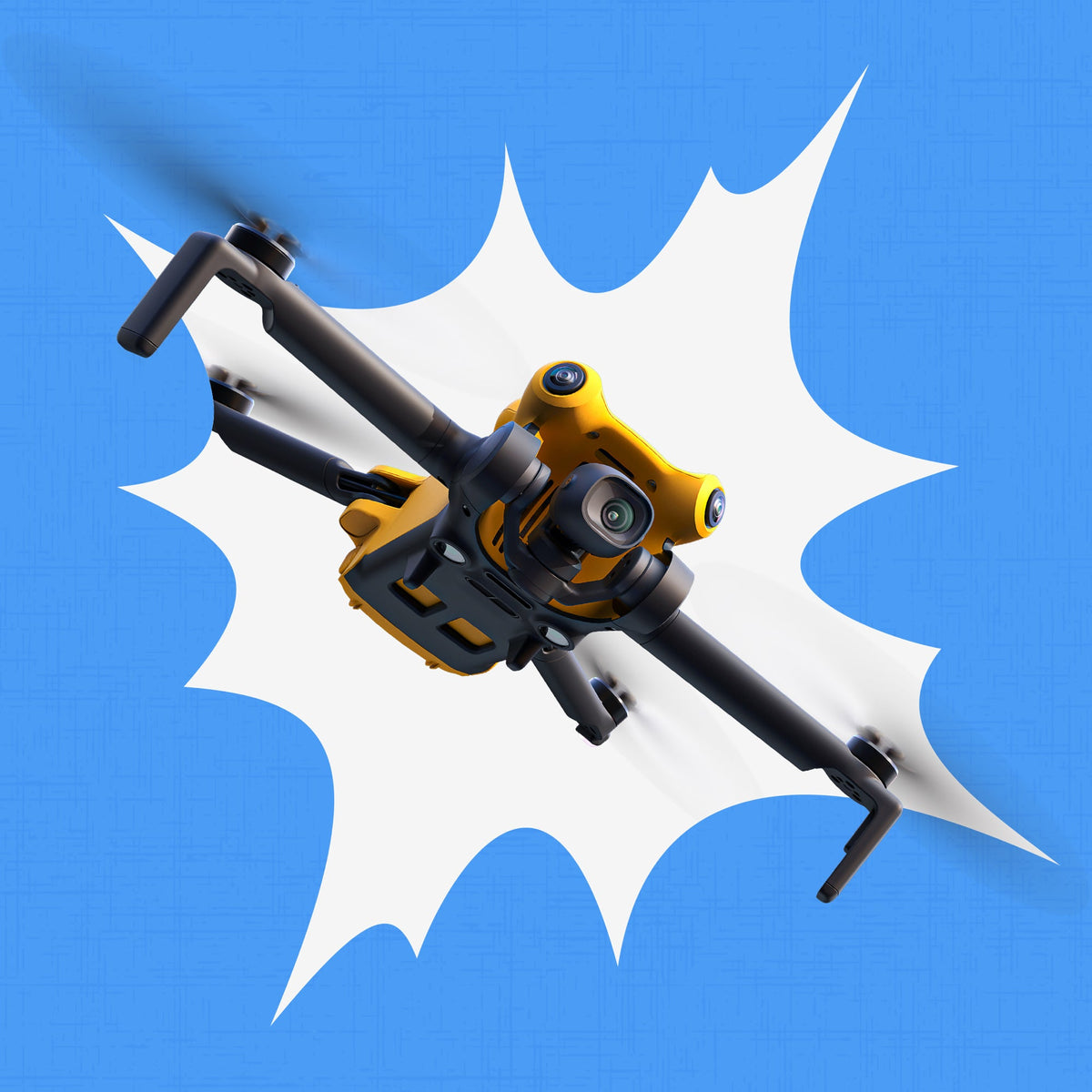
The S1 is the lower-cost route into a camera drone with a screen controller. The aircraft weighs under 249 g and combines a 1/2-inch Sony sensor, 4K/60fps video, a 3-axis mechanical gimbal, AI subject tracking, forward and downward sensing, and a stated flight time of up to 40 minutes per battery.
Its screen-controller configuration is especially relevant for a new pilot who wants a complete system rather than a phone-dependent setup. The 5.5-inch FHD touchscreen is rated at 700 nits, includes 32GB of internal storage, and is listed for up to three hours of operation. The controller displays a 1080p/60fps live feed and is designed around SKYROVER's SkyBridge transmission system.
The trade-off is sensing coverage. S1 assists in the forward and downward directions; it does not watch every side of the aircraft. Thin branches, wires, reflective surfaces, low-texture objects, and poor light can also challenge vision systems. It is still the pilot's responsibility to inspect the route and maintain a safe buffer.
View the SKYROVER S1 Screen Controller Combo
SKYROVER X1 with screen controller: best advanced value
The X1 targets pilots who want more camera and sensing capability while staying in the under-249 g class. Its 1/1.32-inch sensor supports 48MP / 8K still output, 4K/60fps HDR video, 4K/100fps slow motion, and true 4K vertical capture. The aircraft also provides 360-degree sensing coverage and a stated maximum flight time of up to 32 minutes per battery.
The RC-with-screen package uses the same practical 5.5-inch FHD, 700-nit format, with 32GB of internal storage and up to three hours of stated controller runtime. That combination makes the X1 relevant to travel creators, real-estate shooters, and pilots who frequently switch between horizontal and vertical deliverables.
X1's sensing coverage is broader than S1's, but no consumer drone is collision-proof. Automated tracking and obstacle sensing should be treated as assistance, not permission to fly through an uninspected route.
View the SKYROVER X1 Screen Controller Combo
DJI Mini 4 Pro with DJI RC 2: best for the DJI ecosystem
DJI Mini 4 Pro is an established premium mini-drone option. With the standard battery, DJI lists it under 249 g. Its core features include a 1/1.3-inch sensor, 4K/60fps HDR true vertical shooting, omnidirectional obstacle sensing, ActiveTrack 360 degrees, and O4 transmission.
DJI RC 2 has a 5.5-inch 1920-by-1080 display rated at 700 nits, 32GB of internal storage, expandable microSD storage, and up to three hours of stated operating time. Its strongest reason to buy is not the screen alone: it is the connection to DJI Fly, DJI's accessory range, and a mature workflow that many existing DJI pilots already understand.
The main trade-off is package cost. Compare like-for-like configurations, including controller type and battery count, rather than comparing an aircraft-only price with a screen-controller combo.
DJI Air 3S with DJI RC 2: best for a larger dual-camera system
Air 3S is not a direct mini-drone substitute. DJI lists a 724 g takeoff weight, a 1-inch primary camera, a 70mm-equivalent medium tele camera, up to 4K/120fps slow motion, and a stated maximum flight time of 45 minutes. The RC 2 package is appropriate for buyers who prioritize a dual-camera system and are comfortable with the higher price, larger aircraft, and applicable registration or operating requirements.
For a recreational U.S. pilot, weight changes the regulatory calculation. Do not choose solely on the controller. Review current FAA registration guidance, complete TRUST when flying recreationally, and check the rules that apply to the purpose and location of the flight.
How to choose the right screen-controller drone
Start with the aircraft, not the display
A screen cannot improve weak camera hardware, missing stabilization, unsuitable sensing coverage, or insufficient flight time. Decide first whether you need beginner simplicity, 360-degree sensing, native vertical capture, a telephoto camera, or a specific tracking workflow. Then compare the screen-controller bundle that supports that aircraft.
Compare the complete price
Screen controllers are normally sold in a higher-tier configuration. Check how many batteries are included, whether a charging hub and case are included, and whether the bundle adds storage or protection. The cheapest aircraft listing is rarely a fair comparison with a complete RC combo.
Check brightness and storage
A 700-nit display is usable outdoors but may still benefit from shade in harsh sun. Internal storage is useful for app data, cached media, and screen recordings, but the aircraft's recording media remains important for full-quality footage. Review each manufacturer's supported card specifications before buying storage.
Confirm the controller workflow
Some pilots want a controller that runs only the manufacturer's flight app; others expect third-party apps or unrestricted Android features. DJI states that RC 2 does not support installing third-party apps. Review this limitation, offline-map behavior, update requirements, export workflow, and screen-recording process before purchase. SKYROVER setup tutorials for both screen controllers are available in the Guide Video center.
Which model should you buy?
- Choose SKYROVER S1 RC Combo when you want the most accessible price, long stated battery life, 4K/60fps, tracking, and a no-phone flight display.
- Choose SKYROVER X1 RC Combo when 360-degree sensing, HDR video, 4K vertical capture, and a larger mini-drone sensor matter more.
- Choose DJI Mini 4 Pro with RC 2 when DJI's software, accessory ecosystem, and ActiveTrack workflow justify the higher package price.
- Choose DJI Air 3S with RC 2 when you need a larger dual-camera aircraft and accept the additional cost, weight, and regulatory considerations.
For more buying context, compare the best camera drones under $500, review the best DJI alternatives, or see how SKYROVER X1 compares with DJI Mini 4 Pro.
Screen-controller drone FAQ
Can I fly a screen-controller drone without a phone?
For normal flying after setup, a dedicated screen controller provides the flight app and live view without using a phone as the display. Internet access may still be needed for initial activation, firmware updates, maps, account functions, or other online services.
Is a built-in screen worth the extra cost?
It is usually worth considering for frequent pilots, paid shoots, travel, or anyone who wants faster setup and to keep a phone free. Occasional pilots who are comfortable mounting a phone may prefer to spend the difference on batteries or accessories.
Does a brighter controller make a drone safer?
A readable display improves awareness of warnings, camera framing, and telemetry, but it does not replace visual line of sight, route inspection, or sound judgment. Display brightness should be treated as usability support rather than a safety guarantee.
What is the best beginner drone with a screen controller?
Among the models compared here, SKYROVER S1 RC Combo is the value-focused beginner choice because it combines a lower package price with a stabilized 4K camera, tracking, forward/downward sensing, and long stated flight time. The best choice still depends on local rules and the environment in which you plan to fly.
Sources and methodology
SKYROVER specifications and live prices were checked against the official X1 and S1 product pages on September 3, 2026. DJI controller specifications were checked against the official DJI RC 2 specifications. DJI aircraft configurations and prices were checked against the official Mini 4 Pro RC 2 and Air 3S RC 2 store pages. Maximum range, runtime, camera modes, and sensing claims are manufacturer specifications measured under stated test conditions; real-world results vary.


Leave a comment
This site is protected by hCaptcha and the hCaptcha Privacy Policy and Terms of Service apply.