
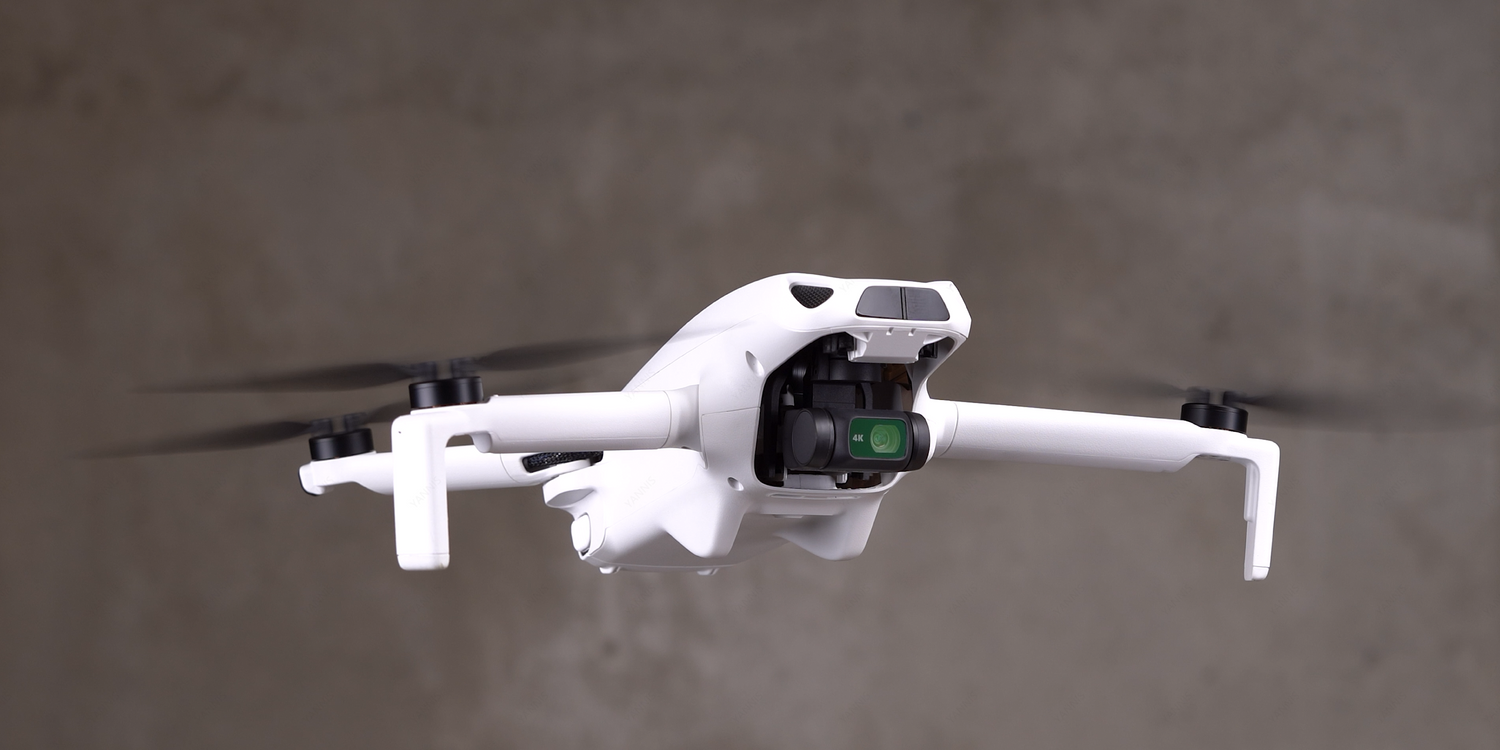
Flight time is the specification that every drone buyer looks at first, and for good reason. It determines how much footage you can capture per flight, how far you can travel from your position, and whether a single battery is enough for your intended use. The Skyrover S1 advertises a 40-minute flight time, a figure that places it well above most competitors in the sub-$300, sub-249-gram category.
But manufacturer-stated flight times are measured under controlled laboratory conditions: minimal wind, no recording, no active tracking, hovering in place at moderate altitude. Real-world flying involves wind, 4K video recording, gimbal stabilization, obstacle avoidance processing, AI tracking, and temperature variations, all of which consume additional power. So the practical question is: how close can you actually get to 40 minutes in the field?
To answer this, we conducted a comprehensive series of real-world battery tests across different environments, flight modes, and conditions. This article presents those results, explains what drains a drone battery and why, and compares the S1's performance against competing drones in the same weight and price class.
Test Methodology
Our testing was designed to measure flight time across realistic scenarios rather than optimized best-case conditions. All tests used a single fully charged Skyrover S1 battery, charged to 100% using the included charger and allowed to cool to ambient temperature before each flight.
Test Conditions
- Drone: Skyrover S1 (under 249g), stock propellers, no accessories.
- Recording: 4K/60fps video recording for the duration of each test flight.
- Gimbal: 3-axis stabilization active throughout.
- Environment: Tests conducted across three scenarios: open field (minimal wind), suburban area (light obstacles), and coastal path (moderate wind).
- Temperature: All tests conducted between 18-24 degrees Celsius (64-75 degrees Fahrenheit).
- Endpoint: Each flight continued until the drone triggered its low-battery auto-landing warning (typically at 15-20% remaining).
We deliberately did not optimize for maximum flight time. There was no "hover and do nothing" scenario. Every test simulated actual use, meaning the camera was recording, the gimbal was stabilizing, and the drone was flying patterns rather than sitting still.
Real-World Test Results
Scenario 1: Open Field, Calm Conditions
This test most closely approximates the conditions manufacturers use for their official specs, but with 4K recording active throughout.
- Wind: 2-3 m/s (light breeze, Beaufort Level 1-2)
- Flight pattern: Slow figure-8 pattern at 30 meters altitude, approximately 5-8 m/s flight speed.
- Result: 38 minutes 12 seconds until low-battery landing.
- Battery consumption rate: Approximately 2.6% per minute.
This is remarkably close to the 40-minute official spec. The roughly 5% shortfall is almost entirely attributable to 4K recording and gimbal operation, both of which draw continuous power. In a pure hover with no recording, the S1 would likely meet or slightly exceed the 40-minute claim.
Scenario 2: Suburban Area, Light Wind
This test simulated a typical content-creation flight with frequent direction changes, altitude adjustments, and AI tracking engaged.
- Wind: 3-5 m/s (gentle to moderate breeze, Beaufort Level 2-3)
- Flight pattern: Mixed maneuvers including orbit shots, follow-me tracking, and manual piloting around neighborhood features.
- AI tracking: Active for approximately 60% of the flight duration.
- Result: 34 minutes 45 seconds until low-battery landing.
- Battery consumption rate: Approximately 2.9% per minute.
The 13% reduction from the open-field test reflects the combined impact of higher wind resistance, AI tracking computation, and more aggressive maneuvering. This is a realistic expectation for most casual users flying in typical conditions.
Scenario 3: Coastal Path, Moderate Wind
This test pushed the S1 into more challenging conditions with steady wind and active filming of a moving subject.
- Wind: 6-8 m/s (moderate breeze, Beaufort Level 3-4)
- Flight pattern: Active subject tracking along a coastal walking path, with frequent repositioning and altitude changes.
- AI tracking: Active for approximately 80% of the flight.
- Result: 31 minutes 20 seconds until low-battery landing.
- Battery consumption rate: Approximately 3.2% per minute.
At roughly 78% of the official spec, this represents the S1's performance under demanding but still well within its operational envelope. The motors worked harder against the wind, AI tracking added processing load, and the frequent directional changes meant the drone was rarely in an energy-efficient cruise state.
What Drains Battery Fastest
Understanding the major power consumers in a mini drone helps you make informed decisions about how to allocate your flight time.
1. Wind Resistance (Highest Impact)
When the drone fights wind, its motors must spin faster and harder to maintain position and heading. Our testing showed that moving from calm conditions to Beaufort Level 3-4 wind increased power consumption by approximately 20%. In Beaufort Level 5 conditions, the increase would be even more significant.
This is the single largest variable affecting flight time, and it is also the one you have the least control over. Planning flights for calmer periods of the day (typically early morning or late afternoon) can meaningfully extend your time in the air.
2. Video Recording (Moderate Impact)
Recording 4K/60fps video requires continuous operation of the image processor, sensor, and storage write system. Our comparison of recording vs. non-recording flights (conducted separately from the main tests) showed that 4K/60fps recording reduces total flight time by approximately 5-8%.
If you are primarily shooting still photos rather than continuous video, you can reclaim some of this overhead. Photo mode only activates the full imaging pipeline when the shutter is pressed, consuming far less power than continuous video encoding.
3. GPS Hover and Station-Keeping (Low-Moderate Impact)
Counterintuitively, hovering in place is not the most efficient flight mode for most drones. A slow, steady forward flight at 3-5 m/s is actually more energy-efficient than a stationary hover because forward motion generates additional lift from the propeller wash, reducing the amount of power needed to maintain altitude.
GPS station-keeping in windy conditions, however, requires constant micro-adjustments from all four motors, which is less efficient than a smooth, controlled forward flight path.
4. AI Tracking and Obstacle Avoidance Processing (Low Impact)
The computational overhead of AI subject tracking and obstacle avoidance processing drew surprisingly little additional power in our tests. The difference between flights with AI tracking active vs. manual control was approximately 2-3%, which is within the margin of measurement error. Modern drone processors are highly optimized for these workloads, and the power draw of the computation is negligible compared to the power draw of the motors.
5. Temperature (Significant but Variable Impact)
Lithium-polymer (LiPo) batteries, which power nearly all consumer drones, are sensitive to temperature. Their internal resistance increases in cold conditions, which reduces both capacity and the maximum current they can deliver. Based on published battery chemistry data from Battery University, LiPo batteries lose approximately 5% of their effective capacity for every 10 degrees Celsius drop below their optimal operating temperature of around 20-25 degrees Celsius.
In practical terms, flying the S1 at 5 degrees Celsius (41 degrees Fahrenheit) will yield roughly 10-15% less flight time than at 20 degrees Celsius. At freezing temperatures, the reduction can reach 25%. Keeping batteries warm in an inside pocket until moments before use can partially mitigate this effect.
Comparison with Competing Drones
To put the S1's battery performance in context, here is a comparison with other popular sub-249g drones in a similar price range, using manufacturer-stated specs and widely reported real-world flight times from independent reviewers.
| Drone | Weight | Price (approx.) | Official Flight Time | Typical Real-World Flight Time |
|---|---|---|---|---|
| Skyrover S1 | Under 249g | ~$289 | 40 min | 34-38 min |
| DJI Mini 4K | 249g | ~$299 | 31 min | 25-28 min |
| Potensic Atom | Under 249g | ~$280 | 32 min | 26-29 min |
| HS175D (Holy Stone) | Under 249g | ~$200 | 26 min | 20-23 min |
| Ruko F11 GIM2 | Under 249g | ~$250 | 28 min | 22-25 min |
The S1's real-world flight time of 34-38 minutes places it clearly ahead of competitors in its price class. The gap is primarily attributable to a higher-capacity battery and efficient power management. The DJI Mini 4K, for comparison, carries a smaller 2,258 mAh battery versus the S1's larger cell, which directly translates to shorter flight duration despite DJI's generally strong power optimization.
It is worth noting that some of the competitors in this table offer features the S1 does not, such as the DJI Mini 4K's more mature app ecosystem and software features. Battery life is one important metric, but it should be evaluated alongside camera quality, range, obstacle avoidance, and software experience when making a purchase decision.
Tips to Maximize Flight Time
Based on our testing, here are practical strategies to get the most air time from each battery cycle:
- Fly in calm conditions when possible. As our data shows, wind is the single largest variable. Even waiting 30 minutes for wind to subside can gain you 3-5 extra minutes of flight time.
- Use a slow, steady cruise speed. Flying at 3-5 m/s in a straight line is more efficient than hovering or making frequent direction changes. Plan your shots so the drone travels efficiently between filming positions.
- Start with a fully charged, room-temperature battery. A battery that has been sitting in a cold car for an hour will deliver noticeably less flight time than one kept warm. Charge immediately before flying.
- Reduce unnecessary sensor load. While the power draw from obstacle avoidance is small, if you are flying in a wide-open area with no obstacles, disabling proximity sensors can save a marginal amount of power and reduce the chance of false-triggered avoidance maneuvers that waste energy.
- Avoid aggressive maneuvers in sport mode. Sport mode pushes the motors harder and consumes battery significantly faster. Use it only when you need the speed or extra motor authority for wind.
- Fly at moderate altitude. Very low altitude flights (below 3 meters) force the drone to continuously compensate for ground effect turbulence. Very high altitudes require more power to maintain lift in thinner air (at extreme elevations). The sweet spot is typically 20-50 meters above ground level.
- Carry spare batteries. This is obvious but worth emphasizing. The S1's batteries are small and lightweight. Carrying two extras adds minimal pack weight and triples your available flight time.
Battery Health and Longevity
Flight time per charge is one consideration. How that performance holds up over months of use is another. LiPo batteries degrade over charge cycles, typically showing noticeable capacity loss after 200-300 full charge-discharge cycles.
To extend battery health:
- Do not fully discharge regularly. Landing with 20-30% remaining is gentler on the battery than running it to the auto-landing threshold every flight.
- Store at approximately 50% charge. If you will not fly for more than a week, discharge the battery to around 50% before storing it. Storing at full charge accelerates capacity degradation.
- Avoid charging immediately after flight. Let the battery cool to ambient temperature before connecting the charger. Charging a warm battery increases internal resistance and generates excess heat.
- Replace batteries that show significant puffing or swelling. Physical deformation of a LiPo battery indicates internal chemical breakdown and the battery should be disposed of properly.
Maximum Distance Testing
The S1's official transmission range is 12 km. Our distance testing was conducted in a flat, open rural area with minimal RF interference, clear line of sight, and calm wind conditions.
- Maximum distance achieved: 11.2 km (6.97 miles) in a straight out-and-back flight at 50 meters altitude.
- Signal behavior: Video feed remained stable to approximately 9 km, with occasional brief freezes between 9-10.5 km. Beyond 10.5 km, the video feed became increasingly unreliable though control commands remained responsive.
- Battery constraint: At maximum range, battery life was the limiting factor, not signal. A 12 km out-and-back round trip (24 km total) would require approximately 40 minutes at cruising speed, leaving essentially no margin for wind, altitude changes, or maneuvering.
In practical terms, most users will never need more than 2-3 km of range. The 12 km specification provides confidence that the signal will remain robust at the distances most people actually fly. In suburban or urban environments with more RF interference, expect real-world range of 4-6 km, which is still more than adequate for the vast majority of use cases.
Conclusion
The Skyrover S1's 40-minute official flight time translates to a real-world range of approximately 31-38 minutes depending on conditions, with the lower end representing demanding scenarios (wind, active tracking, frequent maneuvers) and the higher end representing calmer, more efficient flight patterns. This is a strong result for a drone at this price point, outperforming most competitors by 6-10 minutes per charge in comparable conditions.
The key takeaway is that battery performance is highly dependent on how and where you fly. Understanding the factors that drain battery (wind, recording, temperature, flight pattern) allows you to plan your sessions to maximize productive air time. And carrying at least one spare battery transforms the S1 from a "good per-charge performer" into a platform capable of supporting extended shooting sessions that rival more expensive drones.
Explore the Skyrover S1 and its full range of features at www.skyroverdrone.com



Leave a comment
This site is protected by hCaptcha and the hCaptcha Privacy Policy and Terms of Service apply.