
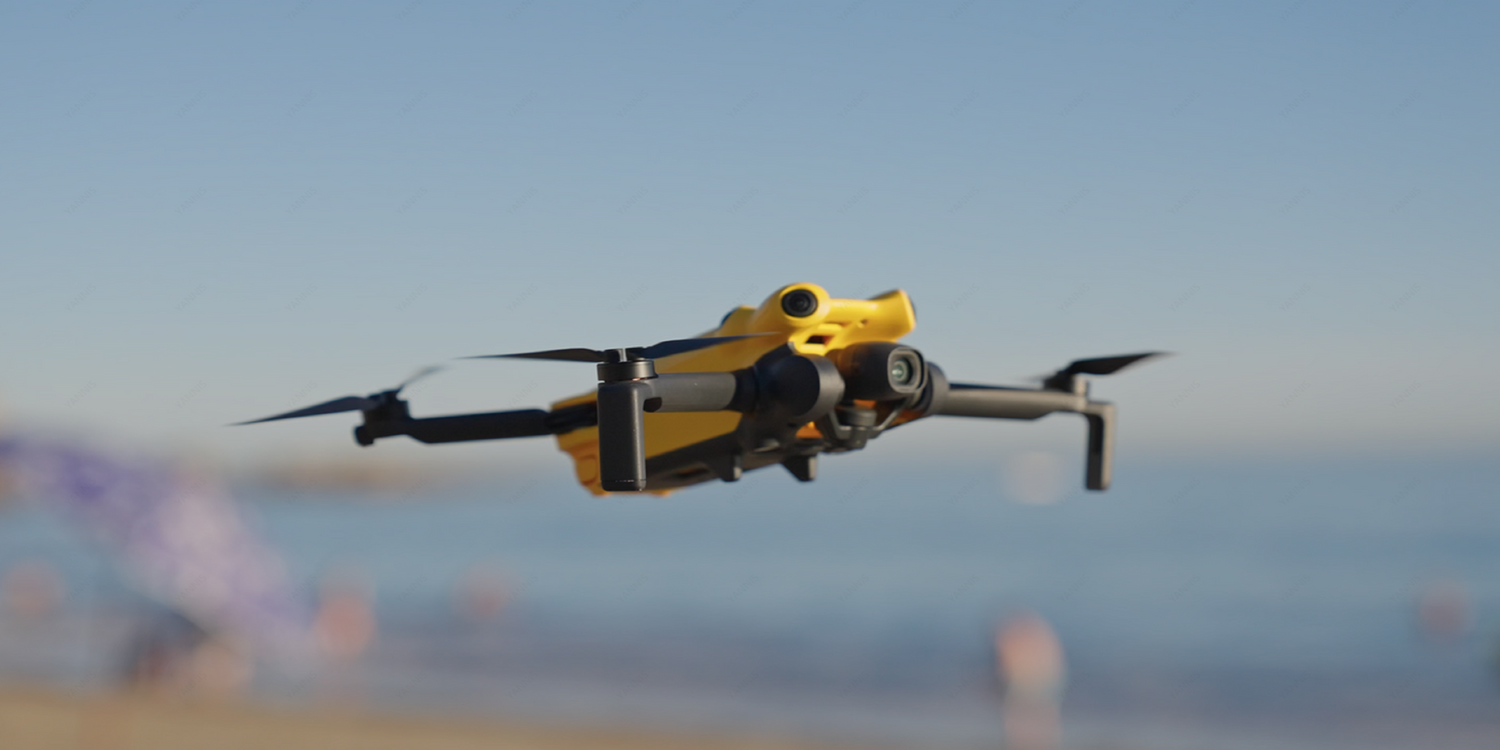
Wind is the single most challenging environmental factor for small drone pilots. A drone weighing under 249 grams has relatively low inertia compared to larger aircraft, meaning gusts can push it around more easily. Yet modern mini drones are engineered to fly in surprisingly strong winds thanks to a combination of GPS positioning, powerful motors, intelligent flight controllers, and gimbal stabilization.
The Skyrover X1 is rated for Level 5 wind resistance, which corresponds to sustained winds of roughly 17-21 mph (29-38 km/h). To understand what that really means in practice, we conducted a series of structured flight tests across varying wind conditions and measured the X1's stability, battery consumption, gimbal performance, and obstacle avoidance behavior at each level. This article presents those findings along with a detailed explanation of how drone wind resistance actually works.
Understanding Wind Resistance: The Beaufort Scale
Wind resistance levels for consumer drones are typically referenced against the Beaufort Scale, a system developed in 1805 by British Admiral Sir Francis Beaufort to estimate wind speed based on observed conditions at sea or on land. While originally designed for sailors, it has become the standard framework for categorizing drone wind resistance.
Beaufort Scale Reference for Drone Pilots
| Beaufort Level | Wind Speed (mph) | Wind Speed (km/h) | Observable Conditions | Typical Drone Capability |
|---|---|---|---|---|
| 0 - Calm | 0-1 | 0-2 | Smoke rises vertically | Any drone |
| 1 - Light Air | 1-3 | 2-6 | Leaves barely move | Any drone |
| 2 - Light Breeze | 4-7 | 7-12 | Leaves rustle, wind felt on face | Any drone |
| 3 - Gentle Breeze | 8-12 | 13-19 | Leaves and small twigs move | Most drones |
| 4 - Moderate Breeze | 13-18 | 20-29 | Small branches move, dust raised | Most consumer drones |
| 5 - Fresh Breeze | 19-24 | 30-39 | Small trees sway, whitecaps on water | Advanced consumer drones (Skyrover X1, DJI Mini 4 Pro) |
| 6 - Strong Breeze | 25-31 | 40-50 | Large branches move, umbrellas difficult | Heavy consumer/prosumer drones only |
| 7 - Near Gale | 32-38 | 51-62 | Whole trees sway, walking against wind is difficult | Professional drones only |
It is important to note that the Beaufort Scale describes sustained wind speeds. Gusts can be significantly stronger, often 30-50% above the sustained speed. A "Level 5" day may include gusts reaching Level 6 or even Level 7 intensity for short periods. This distinction matters for drone pilots because the peak gust, not the average wind, is what typically causes problems.
How Drones Handle Wind: The Technology Behind Wind Resistance
Wind resistance in a mini drone is not achieved through a single feature. It is the coordinated effort of several systems working together in real time.
GPS Position Hold
The foundation of wind resistance is GPS positioning. The drone's flight controller continuously compares its actual GPS position against its intended hover position. When wind pushes the drone off target, the controller commands the motors to compensate, flying into the wind to maintain position.
The Skyrover X1 uses a dual-satellite system (GPS + GLONASS or Galileo, depending on region) for positioning accuracy down to roughly 0.5-1.5 meters in ideal conditions. In strong winds, the GPS hold system works harder because wind gusts create constant positional perturbations that the controller must correct.
Motor Power and Propeller Efficiency
When wind pushes against the drone, the motors on the windward side must spin faster to maintain altitude and position. The X1's brushless motors are rated to deliver sufficient thrust to hover in place even when a significant portion of their power budget is being used to fight wind rather than just supporting the drone's weight.
The propeller design also plays a role. Larger, more aggressive propeller pitches generate more thrust per revolution but are also more affected by turbulence. The X1 uses a balanced propeller profile optimized for efficiency across a range of conditions rather than maximum raw thrust, which contributes to its 32-minute flight time while still providing adequate wind fighting capability.
IMU and Barometer Fusion
The Inertial Measurement Unit (IMU) contains accelerometers and gyroscopes that detect the drone's orientation and movement hundreds of times per second. The barometer measures altitude changes. Together, these sensors provide the flight controller with immediate feedback about wind-induced movement, faster than GPS can report position changes.
When a gust hits, the IMU detects the tilt and acceleration within milliseconds, and the flight controller begins compensating before the GPS even registers a position change. This is why a modern drone can feel rock-steady in moderate winds despite the constant invisible battle happening at the motor level.
Gimbal Stabilization in Wind
The gimbal is the last line of defense for footage quality. Even when the drone's body is tilting and vibrating as it fights wind, the 3-axis gimbal independently stabilizes the camera. The X1's gimbal uses high-resolution encoders that track the camera's exact orientation and make micro-adjustments up to thousands of times per second.
The result is that footage can look perfectly smooth even when the drone itself is working hard to hold position. However, there are limits. In extreme gusts, the gimbal may reach its mechanical range of motion, causing a brief "gimbal overload" warning and visible tilt in the footage. This is the gimbal telling you it has reached its physical limits.
Wind Test Methodology
To evaluate the X1's real-world wind performance, we designed a structured test protocol:
- Location: Open coastal area with consistent, measurable wind and minimal obstructions.
- Wind measurement: Handheld anemometer (wind speed meter) positioned at drone altitude (10 meters) on a pole, with readings logged every 30 seconds.
- Test flights: Conducted at Beaufort Levels 3, 4, and 5, with a minimum of three 5-minute hover tests at each level.
- Metrics recorded: Positional drift (via GPS log), battery consumption rate, gimbal performance (reviewed in post), and obstacle avoidance response time.
Each test included a stationary hover at 10 meters altitude, followed by a slow orbit pattern (10-meter radius) to evaluate control authority during active flight in wind.
Test Results by Wind Level
Beaufort Level 3: Gentle Breeze (8-12 mph / 13-19 km/h)
At this wind level, the X1 barely noticed the wind. Performance observations:
- Positional drift: Less than 0.2 meters during stationary hover. GPS hold maintained the drone's position with confidence.
- Battery consumption: No measurable increase over calm conditions. Approximately 3.1% per minute with 4K recording active.
- Gimbal: No visible impact on footage stability.
- Obstacle avoidance: Functioned normally with no false triggers from wind-blown debris or vegetation movement.
This is the kind of wind you encounter on most pleasant outdoor days. The X1 treats it as a non-event, as it should.
Beaufort Level 4: Moderate Breeze (13-18 mph / 20-29 km/h)
This is where things start to get interesting. You can feel the wind on your face, small branches are moving, and lighter objects on the ground may shift.
- Positional drift: Approximately 0.3-0.5 meters during hover, with occasional 0.8-meter excursions during gusts. The drone maintained position but you could hear the motors increasing RPM during gusts.
- Battery consumption: Increased to approximately 3.4% per minute, a roughly 10% increase over calm conditions.
- Gimbal: Footage remained stable during hover. During orbit maneuvers, there were occasional micro-corrections visible in slow-motion review, but nothing noticeable at normal playback speed.
- Obstacle avoidance: Continued to function reliably. Wind-blown tree branches did trigger occasional proximity alerts, which is actually correct behavior since the branches were moving into the drone's flight path.
The X1 is clearly comfortable at this wind level. Pilots should feel confident flying in Beaufort 4 conditions for any type of shot.
Beaufort Level 5: Fresh Breeze (19-24 mph / 30-39 km/h)
This is the X1's rated maximum, and it shows. Small trees sway, whitecaps form on water, and you can feel the wind making it slightly difficult to walk steadily. Flying at this level requires attention and deliberate technique.
- Positional drift: 0.5-1.0 meters during hover, with gusts causing 1.5-meter excursions. The drone was clearly working hard, with audible motor changes during gusts. GPS hold kept the drone in place but the "fight" was perceptible.
- Battery consumption: Jumped to approximately 3.8% per minute, a roughly 22% increase over calm conditions. Flight time dropped from approximately 32 minutes to roughly 26 minutes of effective flight.
- Gimbal: Remained effective during hover and slow flight, but fast lateral movements against the wind produced occasional horizon-level tilts lasting 0.3-0.5 seconds. These are visible if you are looking for them but generally acceptable for most content.
- Obstacle avoidance: The most notable finding. At Level 5, the obstacle avoidance sensors correctly identified stationary obstacles even when the wind was pushing the drone toward them. The system's response time felt slightly slower, likely because the flight controller was already allocating significant processing bandwidth to wind compensation. In practice, this means you should give the avoidance system a wider margin, maintaining at least 3-4 meters from obstacles rather than the 1-2 meters that is comfortable in calm conditions.
Flying at Beaufort 5 is viable but requires active pilot awareness. Avoid aggressive maneuvers, maintain extra distance from obstacles, and monitor battery levels more frequently.
Practical Safety Tips for Flying in Wind
Fly Into the Wind on the Return
One of the most important wind strategies is to plan your outbound flight with the wind and your return flight against it. If you fly downwind first, the wind assists you outward and you cover more ground. But when it is time to come back, you are fighting the wind the entire way, which drains the battery faster and reduces your effective speed. If your battery runs low while fighting a headwind, the drone may not make it back.
The safer approach is to fly into the wind first. This uses more battery on the outbound leg but guarantees an easier, faster return with the wind at the drone's back.
Monitor Battery More Frequently
In calm conditions, you can get away with checking battery level every few minutes. In Level 4-5 winds, check every 60-90 seconds. Battery drain is faster and less predictable because gusts cause sudden spikes in power consumption. A battery that showed 40% one minute might drop to 28% after a strong gust series.
Avoid Narrow Gaps and Obstacles
Wind can push the drone laterally by a meter or more during gusts. A gap that looks comfortable in calm air becomes dangerous in wind because a gust at the wrong moment can push the drone into a wall, tree, or wire. Give yourself wide margins around any obstacles when flying in strong wind.
Use Sport Mode Judiciously
Sport mode gives the drone more motor power and faster response, which can help fight wind. However, it also disables or reduces obstacle avoidance sensitivity on many drones. If you need the extra power to fight wind, use sport mode in open areas away from obstacles and switch back to normal mode near structures or terrain.
Know When Not to Fly
Even with Level 5 wind resistance, there are conditions where staying on the ground is the right call. Do not fly when:
- Sustained winds exceed 24 mph (Level 6 or above). Even if the drone can technically hold position, the margin of safety is too thin.
- Gusts are unpredictable and rapidly changing direction, as occurs near thunderstorms.
- You are flying over water in strong winds. A gust-induced landing on water means total loss of the drone.
- The wind is strong enough that you doubt your ability to manually control the drone if the GPS system experiences a momentary glitch.
Cinematic Opportunities in Windy Conditions
While wind presents challenges, it also creates unique filming opportunities. Fast-moving clouds, rippling water surfaces, swaying vegetation, and wind-swept landscapes all add dynamic energy to footage that calm conditions cannot provide.
The X1's AI auto tracking proved particularly valuable during our wind tests. With the drone fighting gusts while simultaneously following a subject walking along a coastal path, the tracking algorithm kept the subject centered in frame even as the drone itself was being pushed around. The gimbal smoothed out the physical instability, and the tracking software handled the framing corrections, resulting in footage that looked calm and controlled despite the chaotic conditions.
For dramatic outdoor footage, shooting in Level 4-5 wind can actually enhance your content. The key is to let the drone's stabilization systems do their work and focus your energy on choosing compelling compositions rather than fighting the controls.
Conclusion
The Skyrover X1's Level 5 wind resistance is not just a marketing spec, it is a genuinely usable capability backed by well-engineered GPS hold, responsive motors, and a gimbal that keeps footage smooth even when the drone is working hard. Our testing confirmed that the drone performs confidently in winds up to 21 mph, with predictable degradation above that threshold.
The 360-degree obstacle avoidance system continues to function in windy conditions, though pilots should give it wider margins as wind increases. Battery consumption increases noticeably at higher wind levels, so plan accordingly and always fly conservatively when the wind picks up.
Understanding how your drone handles wind, and respecting the limits of both the machine and the conditions, is the mark of a skilled pilot. The X1 gives you the tools to fly safely in conditions that would ground lesser drones, but the judgment about when and where to fly is always yours.
Explore the Skyrover X1 and its full range of flight capabilities at www.skyroverdrone.com



Leave a comment
This site is protected by hCaptcha and the hCaptcha Privacy Policy and Terms of Service apply.