

Not long ago, a drone weighing less than 249 grams was essentially a toy. It had a shaky camera, a battery that lasted long enough to cross a backyard, and about as much computing power as a digital watch. Fast forward to today, and manufacturers claim their sub-249g drones shoot 4K video at 60 frames per second, avoid obstacles in every direction, fly autonomously while tracking moving subjects, and stay airborne for 40 minutes on a single charge. It sounds too good to be true. Is it?
The answer, as with most things in technology, lies somewhere between genuine breakthrough and careful marketing. Let us break down what is actually happening inside these tiny aircraft, where the engineering is real, and where the spec sheets might be stretching the truth.
The Weight Constraint: Why 249 Grams Matters
Before diving into the technology, it is worth understanding why manufacturers are so obsessed with the 249-gram mark. In the United States, the FAA exempts drones under 250 grams from the registration requirement for recreational use. Similar exemptions exist in many other countries. This single regulation has reshaped the entire consumer drone industry, forcing engineers to pack as much capability as possible into an aircraft that weighs roughly as much as a hamster.
Every gram matters. The frame, motors, battery, camera, sensors, processors, and antennas all have to fit within that budget while still delivering performance that justifies a price tag. It is an engineering challenge that has driven genuine innovation across multiple technology domains simultaneously.
Camera Sensors: Small but Serious
Sensor Size and Image Quality
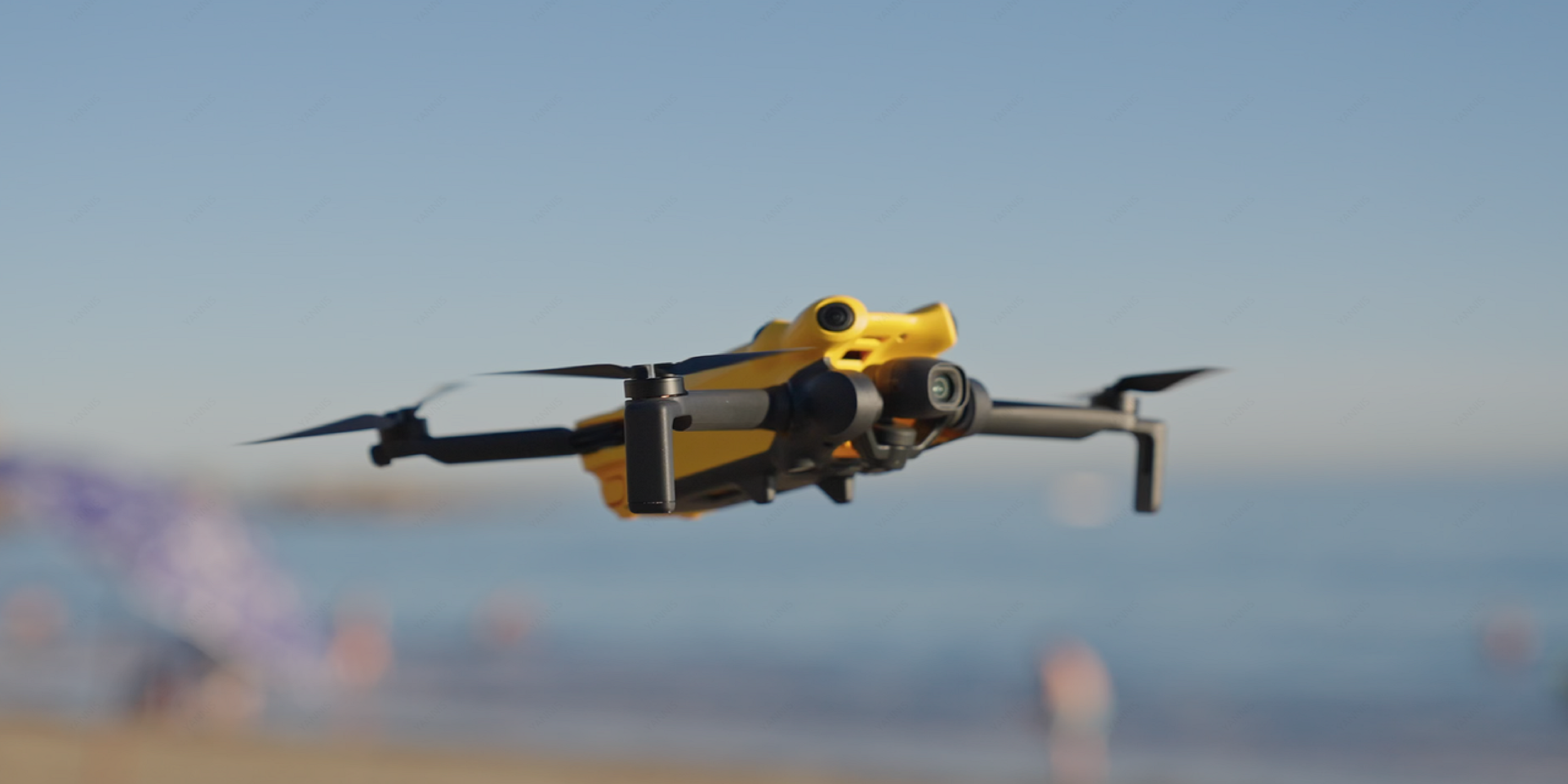
The camera sensor is one of the most weight-sensitive components in a drone. Larger sensors capture more light and produce better image quality, but they also weigh more and require larger, heavier lenses. A decade ago, a sub-249g drone might have had a 1/3-inch sensor -- the kind of thing you would find in a cheap webcam. Today, drones like the Skyrover X1 carry a 1/1.32-inch CMOS sensor with 48 megapixels and an f/1.7 aperture. That is a sensor size that would have been impressive on a ground-based camera a few years ago, let alone one that flies.
The Skyrover S1 uses a 1/2-inch Sony CMOS sensor, which is a well-established sensor platform known for good dynamic range and color reproduction. Sony's sensor division is the dominant supplier for the compact camera market, and their mobile-optimized sensors are specifically designed for size-constrained applications like smartphones and drones.
How 4K/60fps and HDR Actually Work
Shooting 4K video at 60 frames per second requires significant processing power and fast sensor readout speeds. The sensor has to capture and read 8.3 million pixels 60 times every second, and the image processor has to encode that data into a compressed video format without introducing visible artifacts. In a sub-249g drone, this is achieved through purpose-built image signal processors (ISPs) that are designed to handle exactly this workload with minimal power consumption.
High Dynamic Range (HDR) video, which the Skyrover X1 supports, involves capturing multiple exposures for each frame and blending them together to preserve detail in both bright highlights and dark shadows. This is computationally intensive, but modern drone processors handle it using dedicated hardware acceleration rather than general-purpose computing -- similar to how smartphones process HDR photos in the background without the user noticing any slowdown.
True 4K Vertical Video
One of the more interesting innovations in recent lightweight drones is true 4K vertical video. Rather than cropping a horizontal 4K frame to a vertical orientation (which wastes pixels and reduces resolution), some drones physically rotate the camera 90 degrees to capture a full 4K resolution frame in portrait orientation. This is a genuinely useful feature for content creators publishing to platforms like TikTok, Instagram Reels, and YouTube Shorts, where vertical video is the default format.
Obstacle Avoidance: Sensors Shrink, Coverage Grows
Obstacle avoidance is perhaps the area where the gap between marketing and reality is most worth examining. The claim of "360-degree obstacle avoidance" on a drone that weighs less than 249 grams is attention-grabbing, but the specifics of how it works determine how useful it actually is in practice.
How Omnidirectional Sensing Works
The Skyrover X1 offers 360-degree obstacle avoidance, which means it has sensors facing forward, backward, upward, downward, and to both sides. This level of coverage was, until recently, reserved for professional drones weighing well over a kilogram. The miniaturization of these sensor arrays is one of the more impressive engineering achievements in the current generation of lightweight drones.
The sensors themselves are typically a combination of:
- Time-of-Flight (ToF) sensors: These emit infrared light pulses and measure how long they take to bounce back, calculating precise distances to obstacles. They are small, lightweight, and accurate at short to medium ranges.
- Stereo vision cameras: Two small cameras spaced slightly apart create a 3D depth map of the environment, similar to how human depth perception works. These are effective at detecting larger obstacles but can struggle with thin objects like branches or wires.
- Downward vision and infrared sensors: Used primarily for stable hovering and precise landing, these help the drone maintain position even when GPS signal is weak or unavailable.
The Skyrover S1, by contrast, offers forward obstacle avoidance only. This is a conscious design tradeoff: fewer sensors mean less weight, lower cost, and longer battery life, at the expense of comprehensive protection. For many pilots, especially those flying in open areas with clear sightlines, forward obstacle avoidance covers the most common collision scenarios.
What Obstacle Avoidance Can and Cannot Do
It is important to set realistic expectations. Obstacle avoidance systems on lightweight drones are effective at detecting medium-to-large objects (buildings, trees, vehicles, people) at typical flying speeds. However, they have limitations:
- Thin obstacles like power lines, branches, and chain-link fences can be difficult to detect, especially at higher speeds.
- Performance degrades in low light, fog, heavy rain, or when flying toward direct sunlight.
- The effective detection range is typically limited to a few meters, which means the system cannot help you avoid obstacles you are approaching at high speed from a distance.
- Transparent surfaces like glass windows are essentially invisible to most sensor types.
This is not a flaw unique to any particular brand -- it is a fundamental limitation of the sensor technologies that can be made light enough for a sub-249g aircraft. The systems work well as a safety net, but they are not a substitute for careful piloting.
Battery Life: Chemistry and Compromise
Battery life claims are another area where understanding the underlying technology helps separate genuine innovation from optimistic marketing. The Skyrover S1 claims approximately 40 minutes of flight time, and the Skyrover X1 around 32 minutes. These are impressive numbers for sub-249g drones, but they come with important context.
High-Energy-Density Lithium Polymer Batteries
Modern lightweight drones use lithium polymer (LiPo) batteries with increasingly high energy density. The chemistry has improved steadily over the past decade, allowing more energy to be stored per gram of battery weight. Combined with more efficient motors and electronic speed controllers, this has extended flight times significantly compared to earlier generations.
Real-World Versus Laboratory Conditions
The flight times advertised by manufacturers are almost always measured under ideal conditions: minimal wind, moderate temperatures, hovering or slow forward flight, no aggressive maneuvers, and no accessories drawing additional power. In real-world use, actual flight time is typically 15 to 25 percent shorter than the advertised maximum. Flying in wind, using obstacle avoidance sensors, recording 4K video, and performing quick maneuvers all draw additional power.
This does not mean the claims are dishonest -- the testing conditions are usually disclosed, and the numbers are achievable if you fly conservatively. But if you plan to fly aggressively, in wind, or at the extremes of the drone's range, expect shorter flight times and plan accordingly by carrying spare batteries.
AI Tracking: On-Device Machine Learning
Active tracking -- the ability for a drone to autonomously follow and film a moving subject -- has become a standard feature in consumer drones. The marketing term "AI tracking" sounds impressive, and the underlying technology is genuinely sophisticated, but it is worth understanding what is actually happening.
How Subject Tracking Works
When you select a subject to track on your drone's app, the system uses a combination of visual recognition algorithms and machine learning models running on the drone's processor. The drone identifies the subject, predicts their movement trajectory, and continuously adjusts its own position, altitude, and camera angle to keep the subject centered in the frame.
The key engineering achievement here is running these algorithms on a lightweight, low-power processor onboard the drone rather than relying on a cloud connection. This means tracking continues to work even when the drone is out of range of your phone's data connection, and there is no latency introduced by sending video to a server for analysis and receiving instructions back.
Limitations of AI Tracking
Current AI tracking systems work well with clearly defined subjects (a person running, a car driving, a boat on open water) in conditions with good visibility and minimal visual clutter. They can struggle when:
- The subject passes behind obstacles, even briefly.
- Multiple similar-looking subjects are in the frame (the drone might switch to tracking the wrong person).
- Lighting conditions change suddenly (entering or exiting shadow, flying into or away from the sun).
- The subject is moving very fast relative to the drone's maximum speed.
These are not unique to any manufacturer. They reflect the current state of real-time object tracking in a size, weight, and power-constrained system. The technology will improve, but for now, it works best as a tool that assists the pilot rather than replacing human judgment entirely.
Transmission Range: Theoretical vs. Practical
The Skyrover X1 advertises a 15km transmission range, and the S1 lists 12km. These numbers are eye-catching, but they require careful interpretation. Transmission range is measured under ideal conditions: unobstructed line of sight, minimal radio interference, and compliance with local radio power regulations. In practice, range is affected by:
- Obstacles: Buildings, trees, and terrain between the controller and drone can dramatically reduce effective range.
- Radio interference: Urban environments are saturated with Wi-Fi, Bluetooth, and cellular signals that can interfere with the drone's control signal.
- Legal restrictions: In the US, the FAA requires visual line of sight for recreational flights, which effectively limits practical range to a few hundred meters for most pilots, regardless of what the transmission system is technically capable of.
The long-range capability is not useless -- it provides a stronger, more reliable signal at closer distances. A drone with a 15km range will have a more stable connection and better video feed quality at 500 meters than a drone with a 2km range specification. Think of it as headroom rather than a distance you should actually attempt to fly.
Wind Resistance: Level 5 Explained
Both the Skyrover X1 and S1 advertise Level 5 wind resistance, which corresponds to wind speeds of approximately 29 to 38 km/h (18 to 24 mph). This is achieved through a combination of powerful motors relative to the drone's weight, aerodynamic design, and sophisticated flight control algorithms that make rapid adjustments to maintain position and stability.
For a sub-249g drone, this level of wind resistance is genuinely impressive. Earlier lightweight drones struggled in anything more than a gentle breeze, with footage that was visibly shaky and flight paths that drifted uncontrollably. Modern flight controllers use data from gyroscopes, accelerometers, and GPS to make micro-adjustments hundreds of times per second, keeping the drone stable even in challenging conditions.
That said, flying in strong wind still has tradeoffs. Flight time decreases as the motors work harder, control responsiveness is reduced, and video footage may show occasional vibration. If you are shooting professional content, calmer conditions will always produce better results.
The Verdict: Mostly Innovation, Some Inevitable Compromise
After examining each major feature category, a clear picture emerges. The capabilities of modern sub-249g drones are largely genuine, driven by real advances in sensor miniaturization, battery chemistry, processor efficiency, and flight control algorithms. A drone weighing less than 249 grams in 2025 can legitimately do things that a drone five times its weight could not do five years ago.
However, the marketing presentation of these capabilities can sometimes overstate their consistency and reliability. Obstacle avoidance works well but is not infallible. Battery life claims are achievable but only under ideal conditions. AI tracking is impressive but has clear limitations. Transmission range numbers are technically accurate but practically limited by regulations and real-world conditions.
The most honest way to evaluate a sub-249g drone is to view it as an exceptionally capable tool with reasonable limitations -- not a magic device that defies physics. The engineering is real. The compromises are also real. Understanding both sides helps you set realistic expectations and get the most out of whatever drone you choose to fly.
To explore the full specifications and features of the drones discussed in this article, visit skyroverdrone.com.


Leave a comment
This site is protected by hCaptcha and the hCaptcha Privacy Policy and Terms of Service apply.