
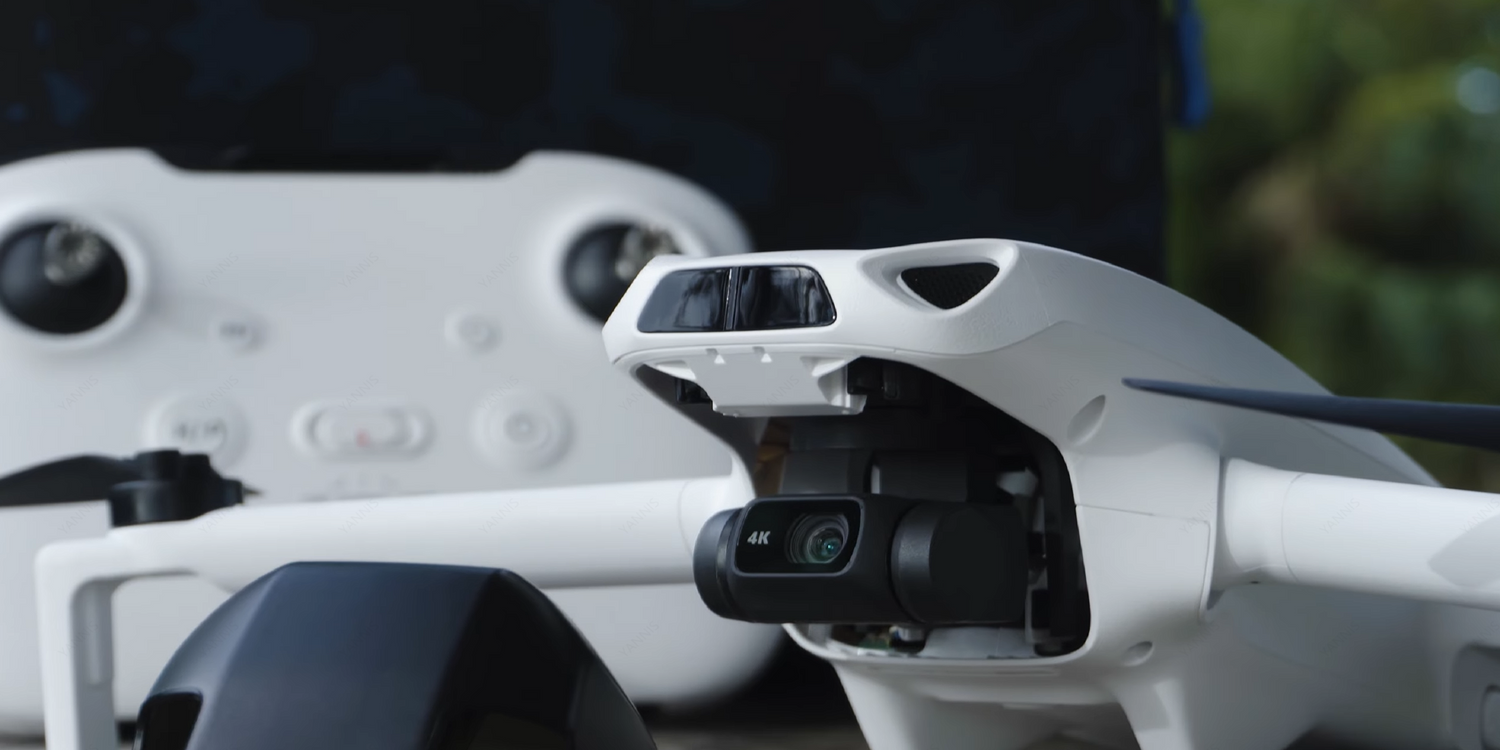
Why a Sub-$500 Drone Makes Sense in 2025
The sub-$500 drone market has evolved rapidly, with manufacturers packing features that were exclusive to premium models just two years ago — larger image sensors, 4K video at 60 frames per second, mechanical gimbals, and even omnidirectional obstacle avoidance. This guide compares four leading camera drones under $500: the SKYROVER X1, SKYROVER S1, DJI Mini 4K, and the Potensic Atom. Each targets a different type of pilot, and the differences in camera hardware, flight performance, and safety features are significant enough to warrant a close look before you buy.
All four drones weigh under 249 grams, meaning recreational pilots in the United States can fly them without FAA registration under current regulations, and operators in the EU, UK, and Canada face fewer restrictions in the open category.
Quick Comparison: All Four Drones Head-to-Head
The table below lays out the core specifications side by side. We will unpack each category in the sections that follow.
| Feature | SKYROVER X1 | SKYROVER S1 | DJI Mini 4K | Potensic Atom |
|---|---|---|---|---|
| Price | ~$449–499 | ~$289 (std) / ~$399 (Fly More) | ~$299 | ~$299 |
| Takeoff Weight | Under 249g | Under 249g | 249g | Under 249g |
| Image Sensor | 1/1.32" CMOS | 1/2" Sony CMOS | 1/2.3" CMOS | 1/3" Sony CMOS |
| Effective Pixels | 48 MP | 48 MP | 12 MP | 12 MP |
| Aperture | f/1.7 | f/2.0 | f/2.8 | f/2.2 |
| Max Video | 4K/60fps HDR, 4K/100fps slow-mo | 4K/60fps | 4K/30fps | 4K/30fps |
| Vertical Shooting | True 4K vertical | 2.7K vertical | No | No |
| Gimbal | 3-axis mechanical | 3-axis mechanical | 3-axis mechanical | 3-axis mechanical |
| Obstacle Avoidance | 360° omnidirectional | Forward-facing | Downward infrared only | Downward ToF only |
| Max Transmission | Up to 15 km | Up to 12 km | Up to 10 km (O2) | Up to 6 km |
| Max Flight Time | ~32 minutes | ~40 minutes | ~31 minutes | ~32 minutes |
| Wind Resistance | Level 5 | Level 5 | Level 5 (38 kph) | Level 4 |
Why Camera Sensor Size Matters More Than Megapixels
The physical size of the image sensor has a far greater impact on image quality than the megapixel count — particularly in low light and high-contrast scenes. A larger sensor captures more light per pixel, which translates to less noise, better dynamic range, and more latitude in post-production. Here is how the four drones compare, ranked from largest to smallest:
- SKYROVER X1 — 1/1.32" CMOS: The largest sensor in this comparison by a meaningful margin. This is the same sensor class found in drones costing nearly twice as much, such as the DJI Mini 4 Pro. Paired with a bright f/1.7 aperture, it gives the X1 a real advantage in challenging lighting.
- SKYROVER S1 — 1/2" Sony CMOS: A solid step up from the 1/2.3" class, with well-regarded Sony color accuracy. At $289, a 1/2" sensor with 48MP output and 4K/60fps is uncommon at this price.
- DJI Mini 4K — 1/2.3" CMOS: The same sensor size DJI has used in its budget drones for several generations. It produces clean footage in good daylight but shows its limitations in low light and high-contrast scenes. The 12MP resolution is adequate but noticeably lower than the 48MP offered by both SKYROVER models.
- Potensic Atom — 1/3" Sony CMOS: The smallest sensor in this group. As noted in Space.com's review, it captures decent footage for casual use, but more visible noise and less detail recovery are apparent compared to the competition.
The practical takeaway: if image quality is your primary concern, the sensor-to-price ratio of the SKYROVER X1 and S1 gives them a clear edge in this price bracket.
Obstacle Avoidance: The Feature That Separates Them
Obstacle avoidance is one of those features you do not fully appreciate until it saves your drone from a tree, power line, or building. The level of environmental sensing varies dramatically across these four drones, and it is arguably the biggest differentiator in this comparison.
SKYROVER X1: 360-Degree Omnidirectional
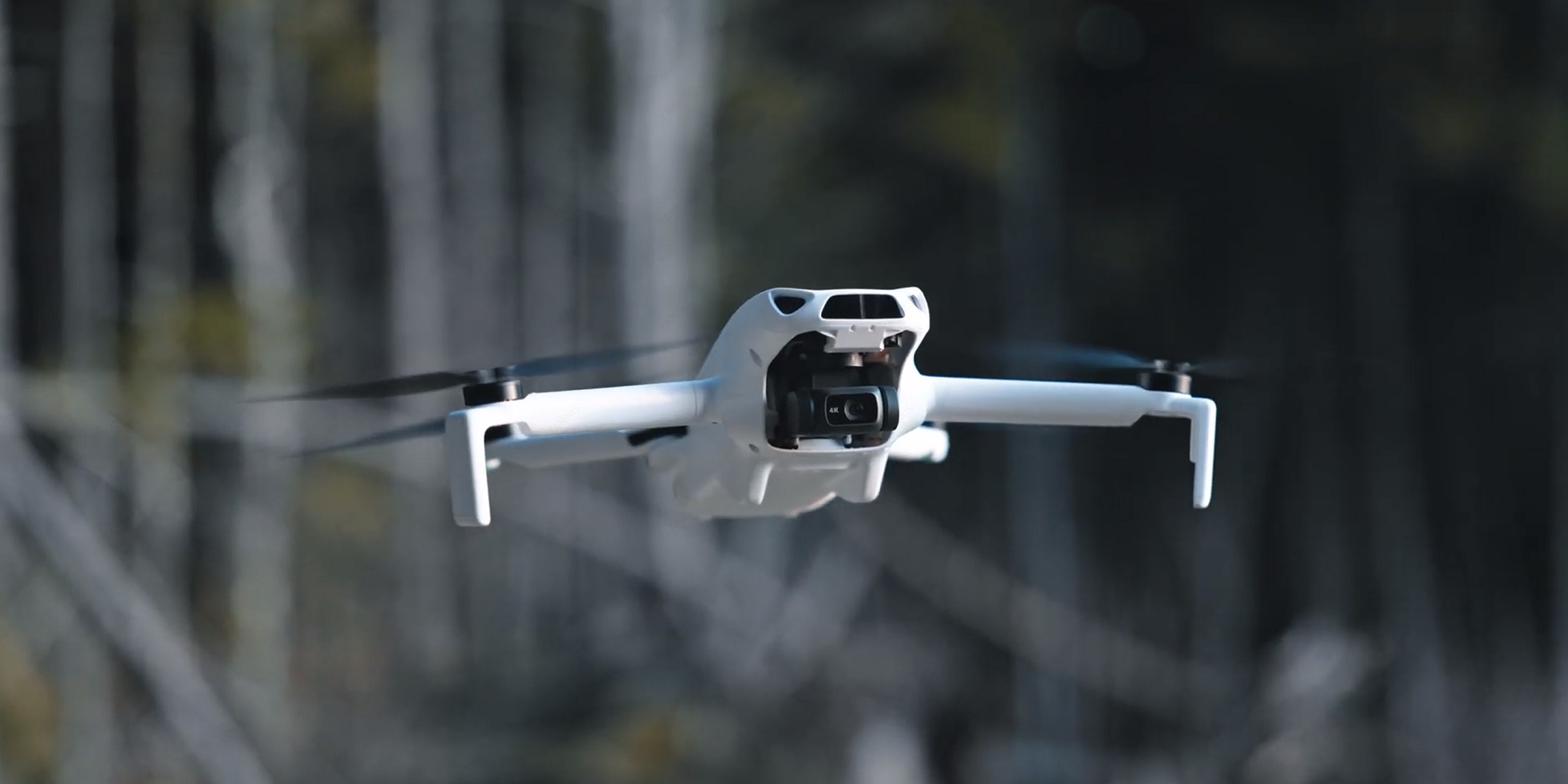
The X1 is the only drone under $500 in this lineup with true 360-degree obstacle avoidance. It uses sensors on all six sides — front, rear, left, right, top, and bottom — to detect and avoid obstacles autonomously. This is a feature typically reserved for drones in the $700–$1,000 range, such as the DJI Mini 4 Pro. For pilots who fly in complex environments — forests, urban areas, tight spaces — this level of protection provides genuine peace of mind. As DroneXL's comparison noted, the X1 delivers Mini 4 Pro-level specs at nearly half the price.
SKYROVER S1: Forward-Facing
The S1 uses forward-facing obstacle avoidance sensors. This covers the most common crash scenario — flying into something in front of you — but leaves the sides, rear, and top unprotected. For most recreational pilots flying in open areas, forward avoidance is sufficient. It is worth noting that even some drones above $300 lack any forward-facing avoidance, so the S1 has an edge in its price tier.
DJI Mini 4K: Downward Infrared Only
DJI's budget offering relies solely on a downward-facing infrared sensing system, designed for hovering stability and landing precision rather than obstacle avoidance during flight. DJI's own support documentation confirms it does not support obstacle avoidance in the traditional sense.
Potensic Atom: Downward Time-of-Flight (ToF)
Similar to the DJI Mini 4K, the Atom uses only a downward sensor (a Time-of-Flight module) for altitude holding and landing assistance. There is no forward, rear, or lateral obstacle detection. This is par for the course at the Atom's price point but worth being aware of if you plan to fly near obstacles.
Deep Dive: SKYROVER X1 (~$449–499)
The SKYROVER X1 is positioned as the premium option in this comparison, yet it still comes in well under $500. Its standout feature is the combination of a large 1/1.32" sensor with 360-degree obstacle avoidance — a pairing that no other drone at this price can match.
The camera shoots 4K video at up to 60fps in HDR, which produces richer colors and better highlight/shadow detail than standard dynamic range footage. For slow-motion capture, the X1 offers 4K at 100fps, a mode that is genuinely rare below $500. Still photos come in at 48MP with the option for 8K output through pixel-level compositing. The f/1.7 aperture is the widest in this group, allowing more light to hit the sensor and improving performance in overcast conditions or during golden-hour shoots.
One particularly relevant feature for social media creators is true 4K vertical shooting. The gimbal rotates 90 degrees to shoot natively in portrait orientation at full 4K resolution, meaning you get vertical content for TikTok, Instagram Reels, or YouTube Shorts without cropping a horizontal frame and losing resolution.
Transmission range reaches up to 15 km under FCC regulations, and flight time sits around 32 minutes per battery. The X1 is available on Amazon (ASIN: B0FCXRB5N5) and directly from skyroverdrone.com.
Bottom line: The X1 punches well above its price class. If you want the most capable all-around camera drone under $500 — with the safety net of 360-degree obstacle avoidance and the image quality of a large sensor — this is the one to beat.
Deep Dive: SKYROVER S1 (~$289)
The SKYROVER S1 is the value play in this comparison. At roughly $289 for the standard kit and $399 for the Fly More Combo, it undercuts the DJI Mini 4K and Potensic Atom while offering better camera hardware.
The 1/2" Sony CMOS sensor captures 48MP stills and 4K/60fps video — a meaningful step up from the 12MP/4K-30fps output of both the DJI Mini 4K and the Potensic Atom. The higher frame rate gives you smoother footage and the option to slow it down slightly in editing. The S1 also supports 2.7K vertical video for social content.
Where the S1 really separates itself is flight time. At approximately 40 minutes per charge, it leads this entire comparison by a wide margin — nearly 30% more air time than the DJI Mini 4K. For real estate photographers, travel vloggers, or anyone who wants to maximize their time in the air without swapping batteries, this is a tangible benefit.
Transmission range extends to 12 km, and the S1 includes forward-facing obstacle avoidance. The Fly More Combo at ~$399 adds extra batteries (pushing total flight time well over two hours), a carrying case, and spare propellers.
The S1 is available on skyroverdrone.com and through major retailers including B&H Photo and Amazon.
Bottom line: The S1 is the best dollar-for-dollar value in this comparison. You get a better sensor and higher frame rates than the DJI Mini 4K at the same price, plus industry-leading flight time. The forward obstacle avoidance adds a layer of safety that the DJI and Potensic entries lack entirely.
Deep Dive: DJI Mini 4K (~$299)
DJI is the most recognized name in consumer drones, and the Mini 4K is its entry-level offering. It benefits from DJI's mature software platform, including QuickShots (automated cinematic flight paths), the DJI Fly app, and a polished user experience from years of iteration.
The camera uses a 1/2.3" CMOS sensor producing 12MP stills and 4K/30fps video. As DroneXL's review notes, the footage quality is solid in good lighting. However, the sensor is noticeably smaller than what SKYROVER offers in both the X1 and S1, and the gap shows in low-light performance and dynamic range. The 30fps cap at 4K also means no slow-motion capability at full resolution.
Transmission uses DJI's O2 (OcuSync 2.0) system with up to 10 km range. Flight time is approximately 31 minutes. The obstacle sensing is downward-facing infrared only, as confirmed by TechRadar, meaning no forward or lateral collision protection. The Mini 4K also does not support vertical shooting.
Where the DJI Mini 4K excels is the overall flight experience. DJI's app is intuitive, GPS locking is fast, and the drone handles wind well. If you already own DJI products or plan to upgrade within the ecosystem, the Mini 4K is a sensible starting point.
Bottom line: The DJI Mini 4K offers the most polished software experience and the reliability of the DJI brand. Its camera hardware and obstacle avoidance are the most limited in this comparison, but for pilots who prioritize app quality and ecosystem compatibility above raw specs, it remains a solid choice.
Deep Dive: Potensic Atom (~$299)
The Potensic Atom is the most straightforward option in this comparison — a no-frills sub-250g drone with a 3-axis gimbal, 4K/30fps video, and a price that makes it approachable for complete beginners. As Space.com's review noted, it is one of the best beginner drones available.
The 1/3" Sony CMOS sensor is the smallest in this group, meaning image quality is the most constrained — particularly in low light. At 12MP stills and 4K/30fps video, the output is acceptable for casual use and learning the basics of aerial photography.
Flight time comes in at approximately 32 minutes per charge, competitive with the DJI Mini 4K and SKYROVER X1. Transmission range peaks at 6 km — the shortest here — but adequate for recreational flying within visual line of sight. Obstacle sensing is limited to a downward Time-of-Flight sensor.
Bottom line: The Potensic Atom is best suited for absolute beginners who want to try drone flying with minimal financial commitment. It covers the basics competently but lacks the camera quality, obstacle avoidance, and transmission range of the other options at the same price point. If your budget is $299 and you want the most camera for that money, the SKYROVER S1 offers noticeably better specs at the same price.
Flight Time and Transmission: Real-World Considerations
Manufacturer-stated flight times and ranges are measured under ideal conditions. In practice, expect roughly 75–85% of advertised numbers in typical flying conditions:
- SKYROVER S1 (~40 min claimed): Expect 30–34 minutes of practical flight time. This still leads the group and is a genuine advantage for extended shooting sessions.
- SKYROVER X1 (~32 min claimed): Expect 25–28 minutes of practical flight time, in line with most sub-250g drones.
- DJI Mini 4K (~31 min claimed): Expect 24–27 minutes. SARVision's full review reported approximately 30 minutes under conservative flying, which is consistent with DJI's estimates.
- Potensic Atom (~32 min claimed): Expect 25–28 minutes.
On transmission range, it is worth noting that flying beyond visual line of sight (BVLOS) is not permitted for recreational pilots in most jurisdictions. A 6 km range (Potensic Atom) is sufficient for the vast majority of legal recreational flights. The longer ranges on the SKYROVER and DJI models provide more headroom for signal penetration in urban environments and areas with interference, rather than enabling you to fly farther away.
Who Should Buy Each Drone
Buy the SKYROVER X1 if you want the most capable drone under $500
The X1 is for pilots who want premium-tier features without the premium price. The combination of the largest sensor, 360-degree obstacle avoidance, 4K/100fps slow motion, true 4K vertical shooting, and 15 km transmission makes it the most complete package in this price bracket.
Buy the SKYROVER S1 if you want the best value in the $250–300 range
The S1 is the logical choice for budget-conscious buyers who still want strong camera performance. At $289, you get a larger sensor and higher frame rates than the DJI Mini 4K, plus forward obstacle avoidance and a class-leading 40-minute flight time.
Buy the DJI Mini 4K if you are invested in the DJI ecosystem
The Mini 4K is the right call if you already use DJI products, value the DJI Fly app, or plan to upgrade within the DJI ecosystem. The camera hardware is the weakest in this comparison, but the flight experience is polished and reliable, and DJI's community support means more tutorials and accessories.
Buy the Potensic Atom if you are a complete beginner on a strict budget
The Atom is a reasonable entry point for someone who has never flown a drone and wants to learn without spending more than necessary. It delivers the core experience — 4K video, 3-axis gimbal, GPS stability — at a straightforward price. However, at the same $299, the SKYROVER S1 offers noticeably better camera hardware and forward obstacle avoidance.
Final Verdict
The sub-$500 drone market has never been this competitive, and consumers are the clear beneficiaries. Here is the short version:
- Best overall: SKYROVER X1 — the most features and best camera hardware under $500
- Best value: SKYROVER S1 — better specs than the DJI Mini 4K at the same price, with the longest flight time in the group
- Best ecosystem: DJI Mini 4K — mature software, brand reliability, and an upgrade path within DJI's lineup
- Best for absolute beginners: Potensic Atom — simple and accessible, though outperformed by the SKYROVER S1 at the same price
All four drones are capable of producing enjoyable aerial footage. The right choice depends on what you prioritize — image quality, safety features, flight time, software polish, or simply the lowest price to get started.
Shop the Drones
- SKYROVER X1 — Starting at ~$449 | Buy on Amazon
- SKYROVER S1 — Starting at ~$289 | Buy on Amazon
- DJI Mini 4K — Starting at ~$299 | Buy on DJI Store
- Potensic Atom — Starting at ~$299 | Buy on Amazon



Leave a comment
This site is protected by hCaptcha and the hCaptcha Privacy Policy and Terms of Service apply.