
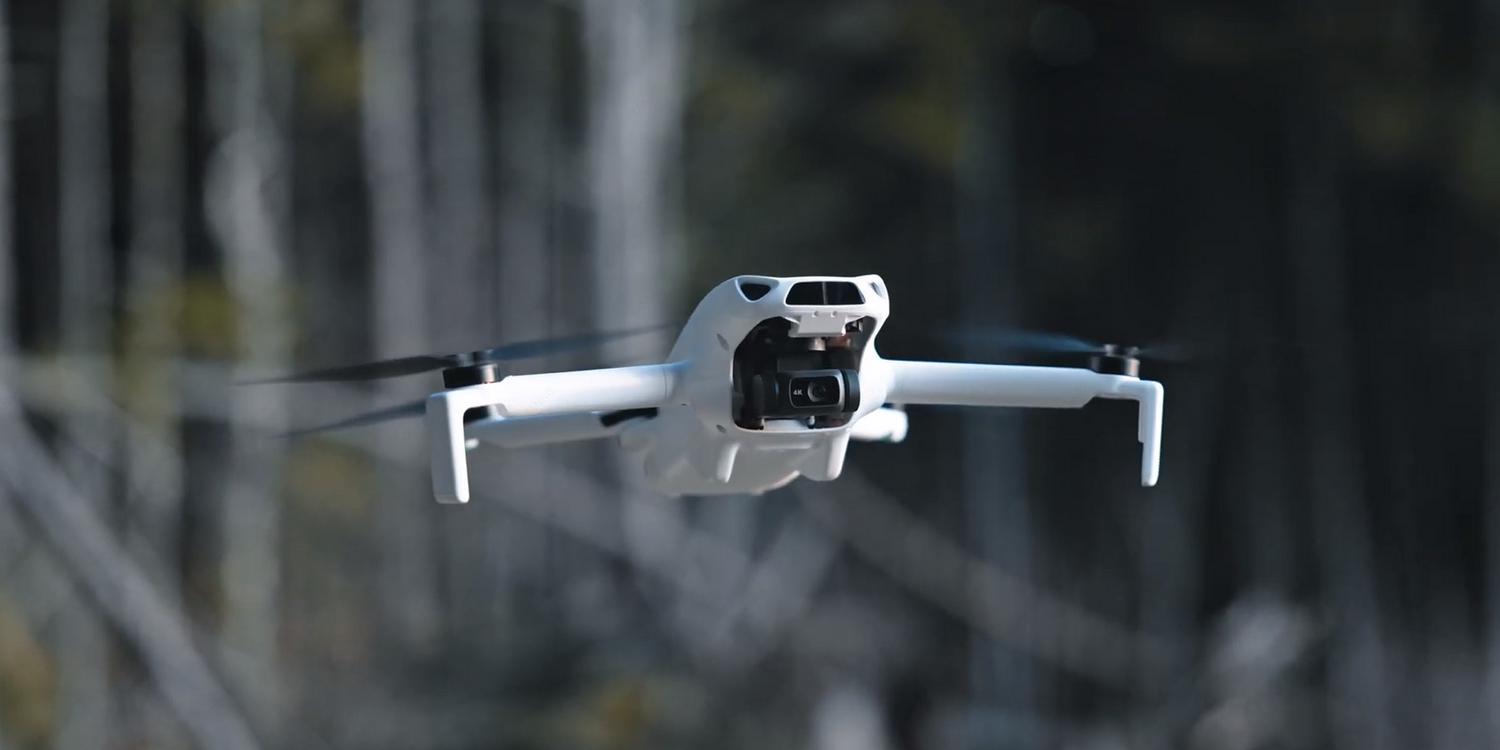
Why This Comparison Matters
The sub-250g drone category has become one of the most competitive segments in consumer drones. Staying under 249 grams means no FAA registration is required in the United States, and similar exemptions apply across Europe and Asia. This weight class is where most first-time buyers start, and where manufacturers must pack the most capability into the smallest possible frame.
Two drones sitting at nearly the same price point — the SKYROVER S1 at $236 during the September 2026 offer and the DJI Mini 4K at approximately $299 — offer surprisingly different feature sets. DJI is the established name, but the S1 brings several hardware advantages worth understanding before you commit your money.
This article breaks down the real differences across the features that matter most when you are actually flying: auto-tracking, GPS stability, obstacle avoidance, camera quality, flight time, and overall value for money. The goal is not to declare a universal winner but to help you understand exactly what each drone can and cannot do so you can choose based on how you plan to use it.
Sources for all specifications include the official SKYROVER S1 product page, the official DJI Mini 4K product page, independent hands-on reviews from The Gadgeteer and DroneXL, and community discussions on Reddit and UAV coaching forums.
Full Specifications Comparison
Before diving into the analysis, here is a side-by-side look at every major specification. Numbers are drawn from manufacturer documentation and verified against independent reviews where available.
| Specification | SKYROVER S1 | DJI Mini 4K |
|---|---|---|
| Weight | Under 249g | 249g |
| Camera Sensor | 1/2" Sony CMOS | 1/2.3" CMOS |
| Still Photo Resolution | 48MP | 12MP |
| Max Video Resolution | 4K at 60fps | 4K at 30fps |
| Gimbal | 3-axis mechanical | 3-axis mechanical + EIS |
| Obstacle Avoidance | Forward-facing | Downward only (visual + infrared ToF) |
| Transmission Range | Up to 12km (dual-band 2.4GHz / 5.8GHz) | Up to 10km FCC / 6km CE (OcuSync 2.0) |
| Max Flight Time | 40 minutes | 31 minutes |
| GPS Hover Accuracy | Approximately ±0.5m | Approximately ±0.6m |
| Wind Resistance | Level 5 (17–21 mph / 29–34 km/h) | Level 5 (up to 38 km/h) |
| Auto-Tracking | AI-assisted tracking (horizontal and vertical) | Not available (QuickShots only) |
| Smart Features | Auto tracking, GPS RTH, 4x digital zoom, vertical shooting | QuickShots (Dronie, Circle, Helix, Rocket, Boomerang), GPS RTH |
| Vertical Shooting | Yes | No |
| Digital Zoom | 4x | 2x (digital) |
| Price (Standard) | $236 (September 2026 offer) | ~$299 |
| Fly More Combo | $319 Combo (September 2026 offer) | Not available |
Auto-Tracking: AI Tracking vs QuickShots
This is arguably the single biggest functional difference between these two drones, and it is worth understanding in detail because it directly affects what you can capture without a second person operating the camera.
What the SKYROVER S1 Offers
The S1 includes AI-assisted auto-tracking that uses machine learning to identify and lock onto a subject, then adjusts both the drone's position and the gimbal angle to keep that subject centered in the frame. This works in both horizontal (landscape) and vertical (portrait) orientations — the latter being particularly useful for content destined for TikTok, Instagram Reels, or YouTube Shorts.
In practical terms, this means you can set the drone to follow you while hiking, running, cycling, or simply walking through a scenic area, and the S1 will maintain a consistent framing without any manual input. The AI system continuously recalculates the subject's position and adjusts the flight path accordingly. Reviews from users who have tested this feature confirm that the tracking remains stable even when the subject changes speed or direction moderately, though extreme maneuvers can cause temporary lock loss, which is true of any consumer-grade tracking system.
What the DJI Mini 4K Offers
The DJI Mini 4K does not include DJI's ActiveTrack technology. There is no native "Follow Me" mode. This is a deliberate product-segmentation decision by DJI — ActiveTrack is reserved for the Mini 4 Pro ($759) and above. What the Mini 4K does offer is QuickShots, which are pre-programmed flight paths:
- Dronie — flies backward and upward from the subject
- Circle — orbits around a subject (single rotation only, then stops)
- Helix — spirals outward while circling
- Rocket — flies straight up with the camera pointing down
- Boomerang — flies an elliptical path around the subject
QuickShots are fun and produce cinematic-looking clips, but they are fundamentally different from auto-tracking. QuickShots execute a fixed flight path around a stationary point. They do not follow a moving subject. If you are hiking down a trail and want the drone to follow you continuously, QuickShots will not accomplish that. Some users on Reddit and YouTube have shared workarounds using the Circle mode as a pseudo-tracking hack, but the results are inconsistent and limited to a single rotation before the maneuver completes.
The Bottom Line on Tracking
If you need the drone to follow you or any moving subject autonomously, the S1 has a clear and meaningful advantage. If you primarily want cinematic preset shots of stationary scenes, the DJI QuickShots are polished and easy to use. For solo content creators who film themselves in motion, the S1's AI tracking is a feature that is genuinely absent from the Mini 4K at this price point.
GPS Stability and Hover Accuracy
Both drones use GPS and GLONASS satellite positioning for stable hovering and return-to-home functionality. However, the details of how each system performs in practice reveal some differences worth noting.
Hover Accuracy
The SKYROVER S1 claims a hover accuracy of approximately ±0.5 meters when GPS lock is strong. The DJI Mini 4K specifies approximately ±0.6 meters under the same conditions. In real-world testing, both drones hover well enough for still photography and smooth video, and the 10-centimeter difference is unlikely to be noticeable to most pilots during casual flying.
Where this difference can matter is in more demanding scenarios: long-exposure photography, precision framing over an extended period, or flying in areas with marginal GPS coverage (urban canyons, dense tree canopy). In these situations, tighter hover accuracy translates directly into fewer micro-corrections and smoother footage.
Return to Home (RTH)
Both drones support GPS-based Return to Home. If the battery runs low or the signal is lost, each drone will autonomously navigate back to its takeoff point. This is a critical safety feature, and both implementations work reliably according to independent reviews. The S1 and Mini 4K both allow you to set a custom RTH altitude to avoid obstacles between the drone's current position and the home point.
Wind Resistance
Both drones are rated for Level 5 wind resistance, which corresponds to wind speeds of roughly 17–21 mph (29–38 km/h). This is a strong rating for the sub-250g class and means both drones can hold their position in moderate wind conditions. In practice, wind is one of the most common sources of unstable footage, and neither drone will produce perfectly smooth results in anything above a gentle breeze without gimbal compensation. The 3-axis mechanical gimbals on both drones do the heavy lifting for stabilization in windy conditions, and both perform comparably here.
Obstacle Avoidance: Forward vs Downward
This is another area where the two drones take fundamentally different approaches, and the difference has real safety implications.
SKYROVER S1: Forward Obstacle Avoidance
The S1 is equipped with forward-facing obstacle avoidance sensors. These sensors scan the area in front of the drone during forward flight and will automatically brake or reroute if an obstacle is detected. According to The Gadgeteer's hands-on review, the forward obstacle avoidance responds reliably to large obstacles like trees, buildings, and poles at moderate flying speeds.
The limitation is that the S1 only has forward-facing avoidance. There are no rear or lateral sensors. This means you are protected when flying forward (the most common flight direction), but you need to be cautious when flying backward or sideways — especially during manual maneuvers or when using auto-tracking, which may cause the drone to reposition in various directions.
DJI Mini 4K: Downward Sensors Only
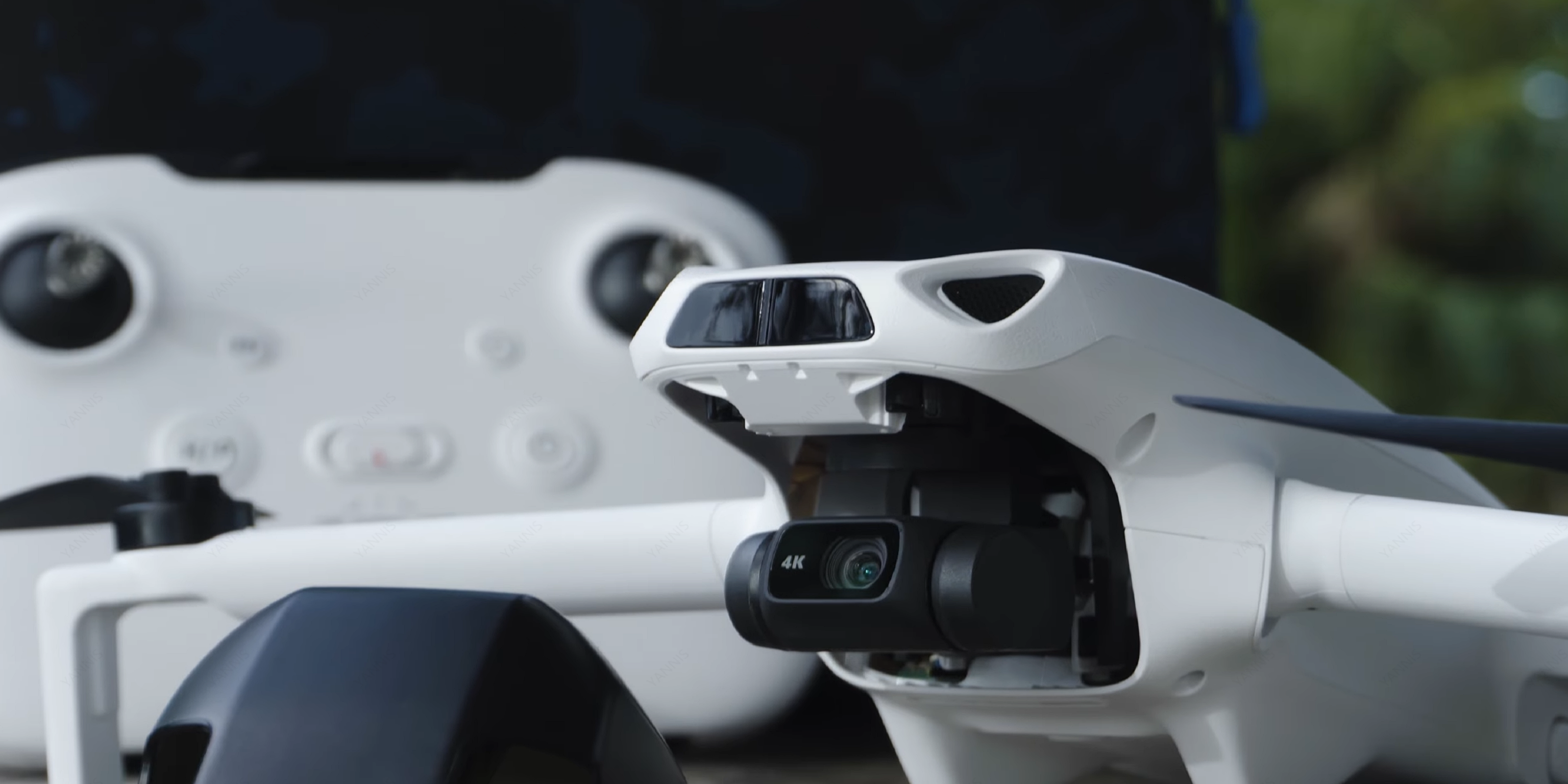
The Mini 4K uses downward-facing visual sensors combined with an infrared Time-of-Flight (ToF) module. These sensors serve two purposes: they enable precise hovering and safe landing when GPS signal is weak (indoor or covered environments), and they provide terrain-following capability. They do not detect obstacles in front of, behind, or to the sides of the drone.
This means the Mini 4K provides no collision protection during forward flight — the direction in which most crashes occur. If you fly the Mini 4K toward a tree, a power line, or a building, it will not warn you or attempt to stop. The downward sensors are genuinely useful for indoor flying and precise low-altitude work, but they do not replace forward obstacle avoidance for outdoor flight safety.
Practical Safety Comparison
For outdoor flying — which is the primary use case for most buyers — forward obstacle avoidance is significantly more valuable than downward positioning sensors. The majority of drone crashes happen when pilots fly forward into obstacles they did not see or misjudged. The S1's forward sensors provide a meaningful safety net that the Mini 4K simply lacks. This does not make the Mini 4K dangerous, but it does mean the pilot bears full responsibility for obstacle awareness, which matters especially for beginners.
It is worth noting that neither drone offers omnidirectional obstacle avoidance. For that, you would need to step up to the DJI Mini 4 Pro at roughly $759 or a higher-end model.
Camera Quality: Sensor Size, Resolution, and Video
On paper, the S1 has a substantial camera advantage. The question is whether that advantage translates into visibly better results.
Sensor and Resolution
The S1 uses a 1/2-inch Sony CMOS sensor capturing 48-megapixel stills. The Mini 4K uses a 1/2.3-inch CMOS sensor capturing 12-megapixel stills. The S1's sensor is physically larger, which generally means better light gathering, improved dynamic range, and lower noise in low-light conditions. The 48MP resolution is four times the pixel count of the Mini 4K's 12MP output, which provides significantly more detail for cropping, printing, or downscaling to sharper final images.
In practice, the resolution difference is most visible when you zoom into an image to crop a specific area or when you view photos on larger screens. For social media posts viewed on a phone, the difference is subtle. For anyone doing print work, detailed landscape photography, or images that will be heavily edited in post-production, the extra resolution from the S1 is a tangible benefit.
Video Frame Rate
Both drones shoot 4K video, but the S1 captures at 60 frames per second while the Mini 4K is limited to 30 frames per second at 4K resolution. The Mini 4K can reach 60fps if you drop the resolution to 2.7K. The higher frame rate on the S1 provides two important benefits:
- Smoother motion in standard playback, particularly for fast-moving subjects like vehicles, sports, or wildlife
- Slow-motion capability — 60fps footage played back at 30fps gives you a smooth 2x slow-motion effect without any resolution loss, which is a powerful creative tool
For content creators who shoot action sequences or want cinematic slow-motion, 4K/60fps is a meaningful advantage over 4K/30fps.
Vertical Shooting
The S1 supports vertical (portrait) shooting, orienting the camera to capture footage natively in a 9:16 aspect ratio. This is increasingly important as short-form vertical video dominates social media. The Mini 4K does not natively support vertical shooting — you would need to crop horizontal footage in post-production, which reduces resolution and adds an editing step.
Gimbal Performance
Both drones use 3-axis mechanical gimbals, which is the gold standard for camera stabilization in this size class. The Mini 4K supplements its mechanical gimbal with Electronic Image Stabilization (EIS), adding an extra layer of smoothing. The S1 relies on its mechanical gimbal alone. In side-by-side comparisons, both systems produce smooth, professional-looking footage. The mechanical gimbal on the S1 has been noted by reviewers as performing well even in moderate wind, with the forward obstacle avoidance also helping maintain steadier forward flight patterns.
Flight Time and Transmission Range
Battery Life
The S1's 40-minute maximum flight time compared to the Mini 4K's 31-minute maximum represents a difference of approximately 29 percent. Both numbers are measured under ideal conditions (hovering in calm air with minimal camera usage), so real-world flight times will be lower for both — typically 20 to 30 percent less depending on wind, speed, and recording settings.
Even accounting for real-world conditions, the S1 consistently delivers several more minutes of flight time per charge. This matters more than it might seem: longer flight time means fewer battery swaps, less downtime, more flexibility to wait for the right lighting or moment, and a greater total coverage area per flight session. For anyone shooting in remote locations where charging is inconvenient, the extra 9 minutes is a significant practical advantage.
The S1 also offers a standard Combo at $319 during the September 2026 offer, which includes additional batteries, further extending total flying time across a session.
Transmission Range
The S1 specifies up to 12km of transmission range using dual-band 2.4GHz and 5.8GHz frequencies, while the Mini 4K quotes up to 10km under FCC regulations (6km under CE regulations in Europe) using DJI's OcuSync 2.0 technology.
In practical terms, most pilots rarely fly beyond 2 to 3 kilometers due to line-of-sight regulations and battery considerations. Both drones provide more than enough range for typical use. The S1's dual-band transmission offers slightly more flexibility in congested wireless environments (urban areas, events) because it can switch between 2.4GHz and 5.8GHz to find the cleaner signal. DJI's OcuSync 2.0 is a mature and well-tested transmission system known for reliable video feeds with minimal latency.
The range advantage goes to the S1 on paper, but both systems are more than adequate for legal, line-of-sight flying.
Price and Overall Value
At $236 for the SKYROVER S1 during the September 2026 offer and approximately $299 for the DJI Mini 4K, S1 currently starts at a lower price. For that nearly identical price, the S1 delivers:
- A larger, higher-resolution camera sensor (1/2" 48MP vs 1/2.3" 12MP)
- Faster 4K video (60fps vs 30fps)
- AI auto-tracking that works with moving subjects
- Forward obstacle avoidance for safer forward flight
- 29 percent longer flight time (40 min vs 31 min)
- Native vertical shooting for social media content
- 4x digital zoom versus 2x on the Mini 4K
This is not a subtle difference. At its current lower promotional price, the S1 offers meaningfully more hardware capability across nearly every specification.
Where DJI Still Has Advantages
Being honest about the comparison, DJI retains several strengths that spec sheets do not fully capture:
- App maturity — The DJI Fly app is polished, frequently updated, and has been refined over years across millions of users. The S1's companion app is functional but newer and less battle-tested.
- QuickShots polish — DJI's pre-programmed flight modes are smooth, reliable, and produce consistently cinematic results. They are easy enough for complete beginners to use on their first flight.
- Brand ecosystem — DJI has a vast community, extensive third-party accessories, thousands of tutorial videos, and readily available spare parts through local and online retailers worldwide.
- Downward sensors — The Mini 4K's visual positioning and ToF sensors make it better suited for indoor flying and precise low-altitude work where GPS is unavailable.
- Firmware reliability — DJI's years of firmware refinement mean the Mini 4K benefits from a mature, stable software stack with fewer edge-case bugs.
The DJI Mini 4K is an excellent drone. It is widely regarded as one of the best budget camera drones available, as noted by DroneXL and TechRadar. The question is whether the S1's hardware advantages at the same price point outweigh DJI's ecosystem maturity — and that depends on your priorities.
Who Should Choose Which Drone
Choose the SKYROVER S1 If
- You need auto-tracking to follow moving subjects — yourself, athletes, vehicles, or animals
- You create content for vertical platforms (TikTok, Instagram Reels, YouTube Shorts) and want native portrait capture
- You want forward obstacle avoidance as a safety net, especially as a newer pilot
- You value longer flight time per battery to maximize your sessions
- You shoot in situations where 4K/60fps or slow-motion capability matters
- You want the best specifications per dollar at this price point
Choose the DJI Mini 4K If
- You prioritize a proven, mature app experience and do not want to deal with newer software quirks
- You primarily shoot static landscapes, real estate, or architectural footage where tracking is unnecessary
- You want QuickShots for easy cinematic clips without any piloting skill
- You value DJI's extensive community, tutorials, and accessory ecosystem
- You occasionally fly indoors or at very low altitude where downward sensors are beneficial
- You trust the established brand and want the peace of mind that comes with DJI's track record
The Verdict
Both drones represent strong value in the sub-250g, sub-$300 category. The DJI Mini 4K earns its reputation through software polish, community support, and reliable simplicity. It is a safe, dependable choice from the most recognized name in consumer drones.
The SKYROVER S1 takes a different approach: it competes on raw hardware capability. At its current lower promotional price, it delivers a better camera sensor, faster video, AI auto-tracking, forward obstacle avoidance, longer flight time, and vertical shooting. These are not marginal differences — they represent a meaningfully more capable flight platform. The tradeoff is a newer brand with a less mature software ecosystem.
For buyers who prioritize features and specifications — particularly auto-tracking and obstacle avoidance, which are normally reserved for drones costing twice as much — the S1 offers exceptional value. For buyers who prioritize software reliability and brand familiarity, the Mini 4K remains a solid, proven option.
Learn More About the SKYROVER S1
If the auto-tracking, forward obstacle avoidance, 4K/60fps camera, and 40-minute flight time sound like the right combination for your needs, you can explore the full specifications, Fly More Combo options, and customer reviews on the official product pages below.
Independent review source: The Gadgeteer — SKYROVER S1 Hands-On Review


Leave a comment
This site is protected by hCaptcha and the hCaptcha Privacy Policy and Terms of Service apply.