
Action Cameras vs Drones: What Sets Them Apart?
Action cameras like the GoPro Hero have earned a permanent spot in the kits of athletes, vloggers, and adventure enthusiasts. They are rugged, waterproof, and exceptionally good at capturing first-person perspectives. You strap one to your helmet, chest, or handlebar, press record, and share your experience with the world.
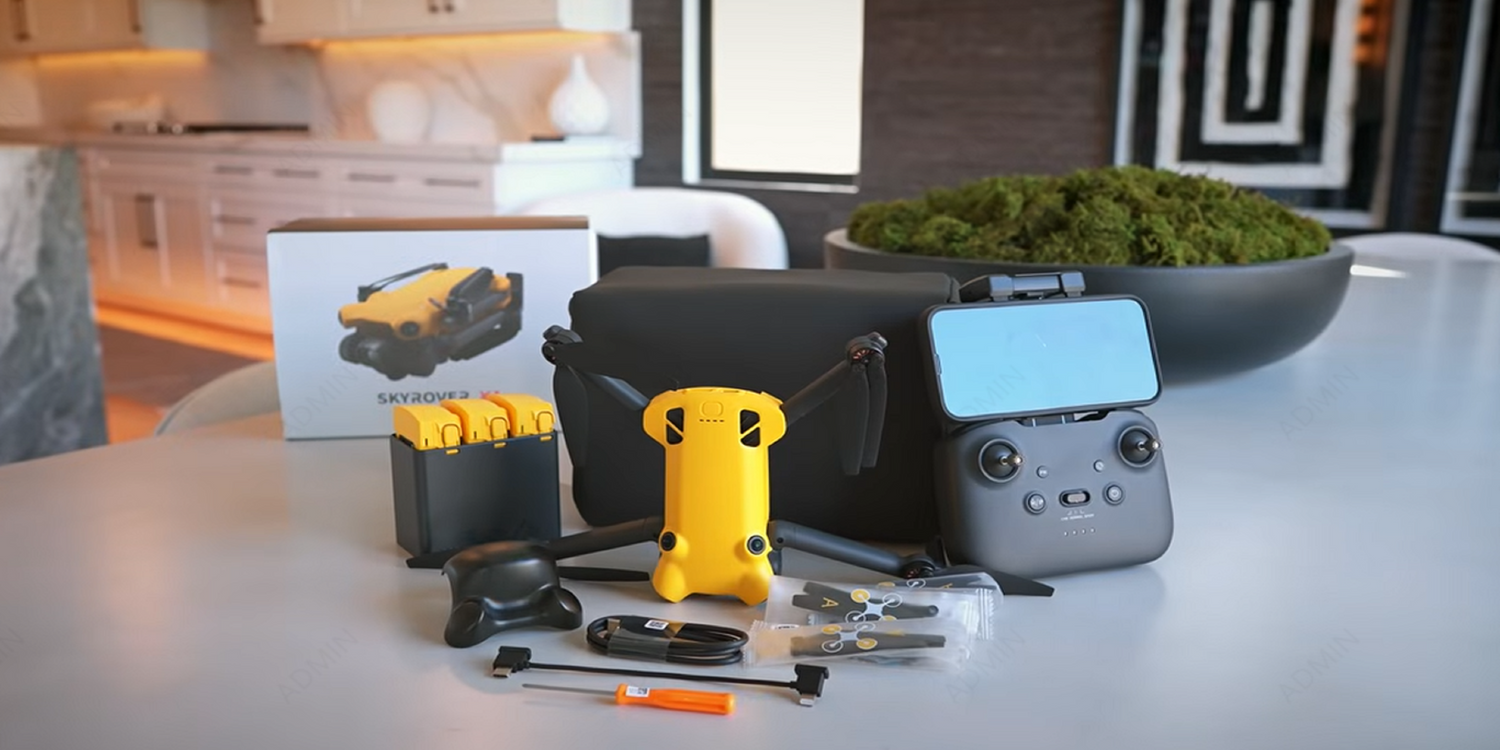
But while action cameras excel at immersive POV footage, they have inherent limitations that no amount of accessories can fully overcome. This is where mini drones like the Skyrover X1 enter the picture, offering perspectives and creative possibilities that ground-based cameras simply cannot replicate. At the same time, action cameras retain distinct advantages in certain scenarios.
This article takes an honest look at both tools, examining where each excels, where each falls short, and how to decide which one deserves a place in your content creation setup.
The Fundamental Difference: POV vs Third-Person Perspective
The single biggest distinction between an action camera and a drone is perspective. An action camera shows the world from your eyes. A drone shows you from the world's point of view.
What a GoPro Does Best
- First-person immersion: Viewers feel like they are right there with you, whether you are mountain biking, skydiving, or snorkeling.
- Rugged reliability: GoPro cameras are waterproof (down to 33 feet without a housing), shockproof, and designed to endure extreme conditions without extra protection.
- Hands-free operation: Once mounted, it records without any input from you. There is no piloting involved.
- Close-up action: For capturing fast-paced detail, like the texture of a wave or the blur of trailside trees, nothing beats a wide-angle action cam at close range.
What a Drone Does Best
- Third-person perspective: The camera captures you in the scene, giving viewers a sense of scale, environment, and context that POV footage lacks.
- Aerial views: Drones provide sweeping landscape shots, top-down perspectives, and elevated angles that are impossible from the ground.
- Cinematic motion: Follow, orbit, and reveal shots add professional production value to any video.
- Spatial freedom: A drone can move in any direction, change altitude, and fly over obstacles that would block a ground-based camera entirely.
Imagine skiing down a mountain. Your GoPro shows the slope rushing toward the lens, the snow spraying, and the trees blurring past. It is visceral and immersive. Now imagine the same run filmed by the Skyrover X1 tracking you from behind and above. You see the entire mountainside, the path you carved, the surrounding peaks, and your own figure carving through the snow. Both perspectives are compelling, but they tell completely different stories.
Dynamic Cinematic Movements: Follow, Orbit, Reveal
Drones introduce motion as a storytelling tool in ways that action cameras cannot match without complex rigs, gimbals, or a dedicated camera operator.
- Follow mode: The drone tracks behind, beside, or in front of you, keeping you perfectly framed as you move through the scene. This is ideal for hiking, cycling, running, or any activity where you want the camera to keep up.
- Orbit mode: The drone circles around you, creating a dramatic 360-degree dynamic view that conveys grandeur and spectacle. Real estate tours, landscape showcases, and event coverage benefit enormously from orbit shots.
- Reveal mode: The shot starts close on your subject, then pulls back and upward to reveal the surrounding environment. This is one of the most effective storytelling techniques in filmmaking, and a drone makes it effortless.
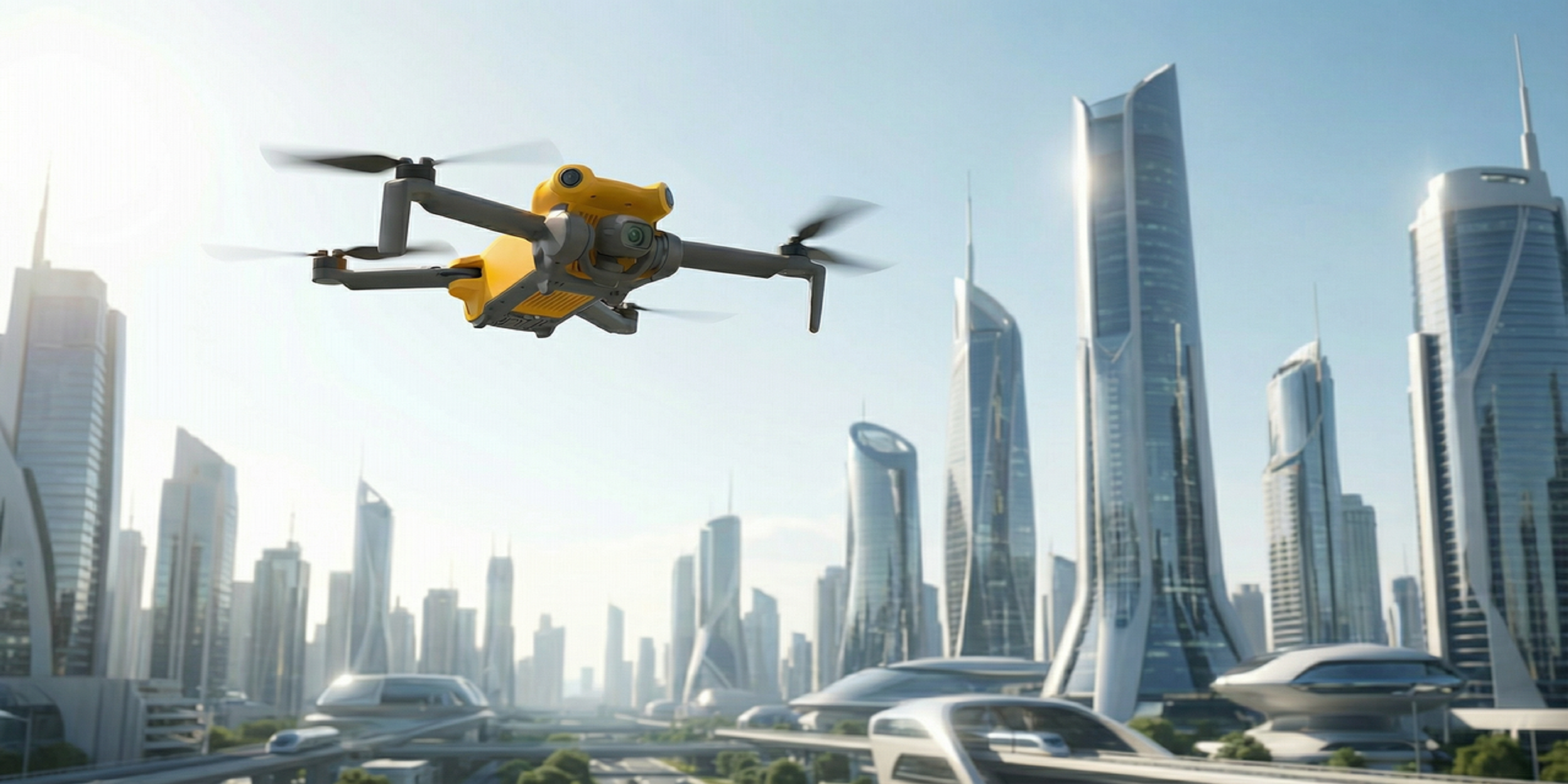
These cinematic movements create shots that feel like a movie scene. With the Skyrover X1, these shots are automated through AI Auto Tracking and 360-degree obstacle avoidance, so even solo creators can produce high-end visuals without a film crew or expensive equipment.
An action camera, by contrast, captures whatever happens to be in front of its wide-angle lens. You can add a gimbal for stabilization, or mount it on an extension pole for partial reveals, but the result never achieves the same freedom of movement or production value.
Battery Life, Durability, and Practical Trade-Offs
This is where the comparison gets more nuanced, because each device has trade-offs that matter in real-world use.
Battery Life
- GoPro Hero: Typically records for 1.5 to 2 hours on a single charge, depending on resolution and settings. You can carry spare batteries and swap them in seconds.
- Skyrover X1: Offers approximately 32 minutes of flight time per battery. For a drone, this is strong for its weight class. Most pilots carry 2-3 batteries for extended sessions.
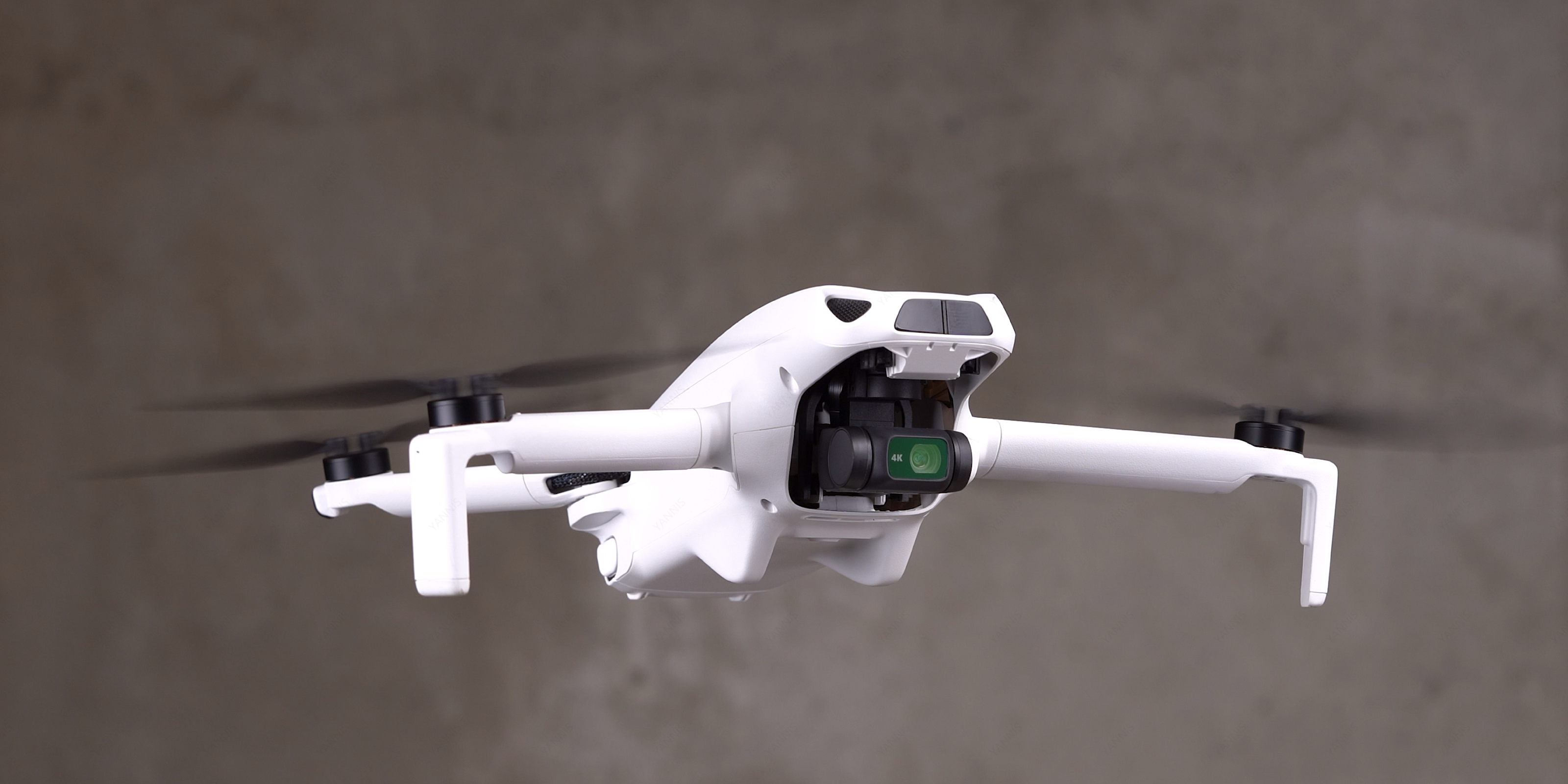
- Skyrover S1: Offers approximately 40 minutes per charge, one of the longest flight times in the sub-250g category.
Action cameras clearly win on raw recording duration, but the comparison is not perfectly direct. Drone footage is often more "efficient" in that a single 15-second aerial clip can serve as the hero shot of an entire video, whereas POV footage may require recording for hours to capture a few compelling moments.
Durability and Weather Resistance
- GoPro Hero: Waterproof without a housing, drop-resistant, and built to survive extreme sports. You can use it in rain, snow, surf, and mud without worry.
- Drones: Not waterproof. Flying in rain or heavy moisture is risky. While the Skyrover X1 offers Level 5 wind resistance (handles winds of 17-21 mph), it cannot match the all-weather ruggedness of an action camera.
Size and Portability
- GoPro Hero: Roughly 2.6 x 1.7 x 1.3 inches and about 154g. Fits in any pocket.
- Skyrover X1: Under 249g with folded propeller arms. Fits in a jacket pocket or small bag. Folds out to a compact footprint that is easy to carry on hikes or trips.
Both are exceptionally portable, though the action camera retains an edge in minimal bulk. The drone requires a slightly larger carrying solution but remains far more compact than traditional camera equipment.
Price Comparison: What You Get for Your Money
Cost is always a factor in choosing creative gear. Here is how the options stack up:
| Feature | GoPro Hero | Skyrover X1 | Skyrover S1 |
|---|---|---|---|
| Price | ~$349-$399 | ~$539 | ~$289 |
| Video Resolution | 5.3K/60fps | 4K/60fps HDR | 4K/60fps |
| Photo Resolution | 27MP | 48MP | 48MP |
| Stabilization | HyperSmooth (electronic) | 3-axis gimbal (mechanical) | 3-axis gimbal (mechanical) |
| Perspective | POV / first-person | Aerial / third-person | Aerial / third-person |
| Obstacle Avoidance | N/A | 360-degree | Forward-facing |
| Waterproof | Yes (33ft) | No | No |
| Battery Life | ~1.5-2 hours recording | ~32 min flight | ~40 min flight |
| Weight | ~154g | Under 249g | Under 249g |
| Vertical Video | Yes (rotated mount) | True 4K vertical | Vertical mode |
At ~$539, the Skyrover X1 costs more than a GoPro but delivers capabilities that no action camera can match, including aerial perspective, 360-degree obstacle avoidance, and 15km transmission range. The Skyrover S1 at ~$289 is competitively priced against a GoPro while offering the unique advantage of flight. For creators on a tighter budget who still want aerial capability, the S1 is a compelling entry point.
Best Scenarios: When to Choose Each
Choose an Action Camera When:
- Water sports and underwater footage: Surfing, snorkeling, diving, kayaking in rough water. Drones and water do not mix safely.
- Extreme close-up action: Mountain biking through tight trails, parkour, contact sports where you need the camera to absorb impacts.
- Long-duration recording: Events, concerts, or activities where you want to record continuously for hours without interruption.
- All-weather conditions: Rain, snow, mud, dust. The action camera does not care.
- Budget constraint with maximum durability: If your content is primarily ground-based action and you need something indestructible, an action camera is the pragmatic choice.
Choose a Drone When:
- Landscape and environment storytelling: Real estate, travel content, nature documentaries. Nothing captures the scale and beauty of a location like aerial footage.
- Solo content creation: You want to appear in your own videos without needing a camera operator. AI tracking makes this seamless.
- Social media content that stands out: Aerial and cinematic shots immediately differentiate your content from the thousands of phone-recorded videos competing for attention.
- Dynamic reveal and tracking shots: Filmmaking techniques that require camera movement through space, not just image stabilization.
- Vertical social media content: Both Skyrover drones offer native vertical shooting, giving you a format-ready edge for TikTok, Instagram Reels, and YouTube Shorts.
Use Both Together:
Many professional creators use both tools in tandem. The GoPro captures the intimate, visceral moments. The drone captures the sweeping, cinematic establishing shots. Together, they create a complete visual story that neither could achieve alone. If budget allows, combining a Skyrover S1 (~$289) or X1 (~$539) with an action camera gives you the most versatile content creation toolkit available at this price range.
Why Skyrover X1 Stands Out Among Mini Drones
While the drone category as a whole surpasses action cameras in perspective and movement, the Skyrover X1 takes it further with a feature set that is particularly well-suited for creators:
- Under 249g: No registration required for recreational use in many regions, and easy to travel with.
- 1/1.32" CMOS sensor with f/1.7 aperture and 48MP: Delivers excellent image quality with strong low-light performance through Super Night Mode.
- 4K/60fps HDR video with 4K/100fps slow-mo: Gives you both high dynamic range for challenging lighting and buttery smooth slow-motion for dramatic effect.
- True 4K vertical shooting: Native vertical format without cropping, preserving full resolution for social platforms.
- 360-degree obstacle avoidance: Flies safely even in complex environments, reducing the risk of crashes that ruin footage and damage gear.
- 15km transmission range: Capture epic wide shots from considerable distance, far beyond what a Bluetooth or Wi-Fi action camera connection allows.
- Level 5 wind resistance (17-21 mph): Stable flight in conditions that would ground lesser drones.
The Skyrover S1 offers many of these advantages at a lower price point, featuring a 1/2" Sony CMOS sensor, 4K/60fps video, ~40 minutes of flight time, and forward obstacle avoidance at ~$289. It is an excellent choice for creators who want aerial capability without the higher investment.
Conclusion: Complementary Tools, Not Competitors
Action cameras and drones are not really in competition with each other. They serve fundamentally different creative purposes. The GoPro captures your experience. The Skyrover X1 captures your world, and your place within it.
For creators focused on social media, travel content, or cinematic storytelling, a mini drone like the Skyrover X1 or S1 provides a perspective advantage that no action camera can replicate. The third-person viewpoint, dynamic motion shots, and aerial freedom transform ordinary content into something that genuinely stands out.
If you have to choose one, ask yourself: do your viewers need to see what you see, or do they need to see you? If the answer is the latter, a drone is not just useful. It is essential.
For creators who want to stand out on TikTok, Instagram, or YouTube with footage that goes beyond the ordinary, a mini drone is one of the most impactful investments you can make in 2026.
Explore the Skyrover X1 and S1 at www.skyroverdrone.com


Leave a comment
This site is protected by hCaptcha and the hCaptcha Privacy Policy and Terms of Service apply.